Paul Lafargue Quotes
Christianity from its origin … declared itself to be an international religion. The internationalism of the worship and the hierarchy of the clergy made the new religion a formidable weapon against the power of the emperors of the East and the West, and later a terrible instrument of oppression in the hands of the ruling classes who have taken the priests into their service.
Paul Lafargue, 1841-1911, Leader, French Workers Party, Son-in-law of Karl Marx, Clericalism and Socialism, 1902
Sourced by: Eigen's Political and Historical Quotations


This vision, known as "The Third Rome" saw not only Moscow as the seat of Christianity for the world, but saw the Czar as the Head of the Christian unified Church. Constantinople had fallen to the Muslims and Rome to the Barbarians and the Pope had virtually no power at the time. Particularly interesting is his vision of transforming a civil Emperor to the head of the Church—one who was strong and wealthy enough to end the schism of the Eastern and Western Churches and command all. In this sense, he was following the Muslim concept of a single secular and religious, all powerful, leader—like the Caliph.


The Roman Catholic Church in America had a very difficult problem with slavery. Catholics were themselves a minoirty, hated and distrusted by many Protestants. In most of the country, the distrusr was based on their large immigrant population, but in the South Catholic theology was hated and the Vatican and Pope were particular targets. The Catholic Clergy generally did not want to take sides in the most contentious issue in America since its inception. The Southern Catholic Clergy did not have that option as in the South, anyone who was not a supporter of slavery was an "enemy of the community and subject to all kinds of violence." Some Southern priests were willing to take the personal risk but did not want to put their followers at risk. In a strange consequence, Catholics--especially Irish Catholics--fought on both sides of the Civil War and often against each other. While it was not an exemplary moral behavior for the Church, there were difficult pressures on Catholic leaders. Further, most of the lowest and most difficult, undesirable jobs were filled by Catholics and most Catholic laymen so and end to slavery as the start of pitting the Catholics against the Blacks. So there was not a groundswell for abolition in most Catholic parishes even in the North.

John Ilyitch Sergieff. Issues of civil and religious freedom have caused schisms and hostility between different religions.

He was stating for France what the English King James I had said a few decades earlier. See {616307}.

The “enemy of the human race” is the Devil, Note that the Pope labels as “allies” of the Devil those who advocate and participate in slavery. Slavery was not only immoral, but the Devil was behind it all. The fact that slavery persisted on a massive scale by Catholic countries illustrates that while the Pope was a powerful leaders and figure, even he could not influence all the “sinners.”
_0_thumbnail_47x47.jpg "Statue of Robert Hall in Leicester.")
Many of the founding fathers were aware of such views in England as the same issues were being debated in America in the debates on Ratification of the Constitution and the required inclusion of the Bill or Rights—specifically the First Amendment.


The writer was born and brought up a Muslim and because he criticizes Islam, he has had a death fatwa issued against him much like Salman Rushdie.


This title of his essay shocked his fellow politicians and may churches that a Congressman would attack churches. Few abolitionists were that outspoken over the disgraceful role that most American Churches had in refraining to oppose slavery. At the time, most Protestant, Roman Catholic, and Jewish clerics either supported slavery or were reluctant to publicly criticize slavery. At the same time the Quakers and many other congregations and clergymen were among the most outspoken and fervent abolitionists. They were very much in the minority,


This famous quotation has been attributed to Voltaire, 1694-1778, and French Philosopher, Denis Diderot, 1713-1784. Most quotation collections erroneously attribute it to Diderot in the version “Men will never be free until the last king is strangled with the entrails of the last priest.” Both Voltaire and Diderot used the quotation as did many others opposed to monarchy and the then repressive church hierarchies. But the origin of the famous phrase was with Meslier. When the priest died, three handwritten manuscripts were found written and signed by him in which he attacked religion in general and the church and the Bible in particular. His Testament was read by Voltaire and Denis Diderot among others and he was very influential in their development as opponents of organized religion.

Jones, like many religious leaders at the time was an inveterate racist. He not only branded anyone advocating against segregation as “in opposition to God”. Jones also solicited the support of the Ku Klux Klan, and like many clerics would never condemn the KKK beatings, tortures, lynchings and murders.

this is a joke Tutu has used, but variants of it exist which are not original to him.


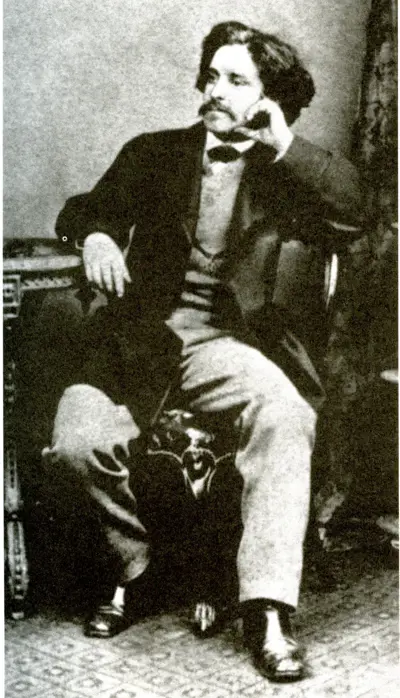
Paul Lafargue was a French revolutionary Marxist socialist, political writer, journalist, literary critic, and activist; he was Karl Marx's son-in-law having married his second daughter, Laura. His best known work is The Right to Be Lazy. Born in Cuba to French and Creole parents, Lafargue spent most of his life in France, with periods in England and Spain. At the age of 69, he and 66-year-old Laura died together by a suicide pact.
