Shigeru Honjo Quotes
Because we in the military worship your majesty as a living god, it is extremely difficult in military command to treat your majesty as only a human.
This and many other statements have been used to refute the allegation made by some that the Japanese Emperor and Commander in Chief had no influence and control over the military and thus was not responsible for any war crimes.
Shigeru Honjo, 1876-1945, Japanese General and Military Aide-de-Camp to Emperor Hirohito
Sourced by: Eigen's Political and Historical Quotations

none of a prosecutorial nature At the end of World War II, a major issue was whether to try the Japanese Emperor as a War Criminal. He had been the Commander and Chief of the Japanese Armed Forces, personally appointed virtually every military of civilian official of consequence—who served at his pleasure, had personally approved every major Japanese invasion (except some of the China incursions) and attack (including Pearl Harbor), personally allowed the execution of American captured prisoner of war flyers from the Doolittle raid on Tokyo, and was knowledgeable about most of the Japanese war crimes. However, General MacArthur thought him a stabilizing force in post-war Japan and never did a detailed investigation of his possible indictment. Instead he wrote this magnificently artfully worded telegram to General Eisenhower. MacArthur wanted to shock the Truman administration into allowing him to reduce the Emperor’s dictatorial powers but retain not only the monarchy but avoid indicting Hirohito. He succeeded, and there was no serious investigation of the Emperor as a possible war criminal despite many calls for Hirohito’s indictment from a few allied politicians {43748} and some American and allied veterans groups. Few could argue with the pragmatic result and the rehabilitation of Japan, but the justice of the decision—or lack thereof—has been debated since. See {43823}, {43824}, {603499}, {43831}, {603752}, {43841}, {601309}, {593777}, {43997}, {43999}, {594634}


This quotation illustrates the negative attitudes towards democracy that existed with many “leaders” of the time. Stuyvesant was appointed by and reported to the Dutch West India Company—not to the government of Holland. New Amsterdam was a commercial venture just as most of the English American Colonies were. Stuyvesant was not a particularly good governor in terms of both making money for the company or governing the new city.


Even some who bought the party line that the Emperor had personally not started the war or the other incursions, blamed the Emperor for his inaction.

This statement has represented the reality of governments before and after.


Cooke was a bitter foe of monarchy in general and not just of Charles I. His argument here is that when the people support a king, they are breaking the Biblical commandment of not worshipping idols. Thus God is against monarchy. See {634004} for another religious attack on monarchy.
Bartolomeo Fiadóni -- Tolomeo da Lucca -- Bartholomew of Lucca
The political control technique of establishing a religion where by God himself ordains the ruler was not unique to the Christians and Muslims. The technique was also used in the Inca Empire of Peru. The first Inca who came up with this creative theocratic concept did so in about 1200.


Actually, although the Emperor wanted to surrender, there was a military coup attempted to prevent his announcement being made to the Japanese people. Fortunately, it did not succeed, but he certainly had the alternative of fighting to the death. There were Japanese hard liners who believed that they could make the invasion of mainland Japan so costly in lives to the Allies that they could negotiate terms. The Atomic Bomb however, in the mind of the Emperor and other Japanese leaders rendered that strategy moot.
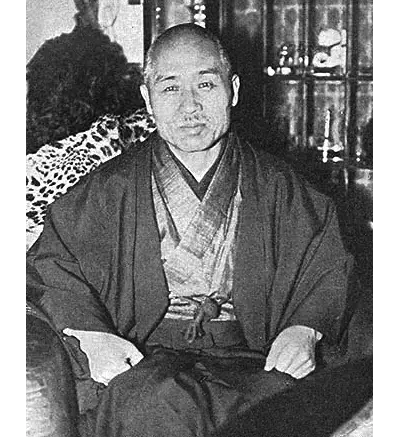
- Born: May 10, 1876
- Died: November 30, 1945
- Nationality:
- Profession:
General Baron Shigeru Honjō was a general in the Imperial Japanese Army during the early period of the Second Sino-Japanese War. He was considered an ardent follower of Sadao Araki's doctrines.
