Genghis Khan Quotes
One sole sun in the sky; one sole sovereign on earth.
Genghis Khan, c. 1152-1227, Temujin, Mongol Conqueror, Motto
Sourced by: Eigen's Political and Historical Quotations


The priest had come to the Empress to complain about the debauchery of her Prime Minister and made the error of describing him as the first man of the empire. The story may be apocryphal but it illustrates the character of the Empress. The source of the exact words are given in the historical novel, Luise Muhlbach, Joseph II. and His Court


The Sikhs had lived for hundreds of years in the Mughal Empire—under Muslim domination where they had been not only like second class citizens but they were periodically persecuted for practicing their religion, including the torture and murder of their Guru. Jinnah himself was a strong advocate of religious toleration and freedom of religion, and proclaimed that for Pakistan. He promised that to the Sikhs as well as total equality with no second class citizenship. However Master Tara Singh was very familiar with the Koran itself and the history of minorities in Islamic nations. The only Muslim country in all of history that had not treated minorities as Second Class Citizens and curtailed the minorities' ability to practice their religion on an equal status was Turkey after the Ataturk revolution, and he knew that most orthodox Islamic clerics considered Ataturk a heretic. They did not see Jinnah as an Ataturk who could revolutionize not only a country but a culture as well. As it turned out, even in the 21st century every month or so another minority person was killed in Pakistan for violating some Koranic prescription—actual of imaginary. The Sikhs turned Jinnah down and he then had Sikhs targeted for mass terrorist attacks and murders.


In 1993 the President left Russia at a time of political turmoil to attend a critical summit conference with the United States.


Lippmann was the most influential pundit of the time. Roosevelt had just been elected but had not yet assumed office. The country was in the midst of the Great Depression and many communities had 80% unemployment. Banks had failed, people were starving, and many people thought that democracy was just not suited to deal with such severe problems. Roosevelt, however rejected the advice and always worked through the Congress and in so doing saved democracy in America.


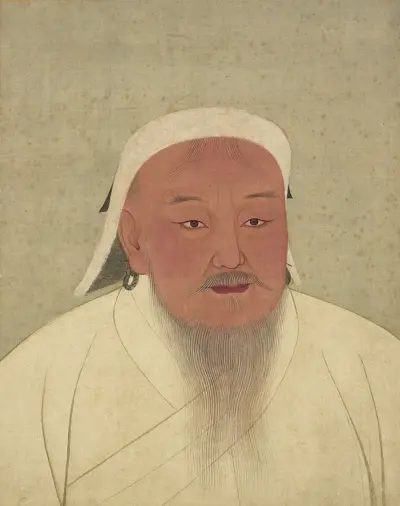
Genghis Khan, was the founder and first Great Khan (Emperor) of the Mongol Empire, which became the largest contiguous empire in history after his death. He came to power by uniting many of the nomadic tribes of Northeast Asia. After founding the Empire and being proclaimed Genghis Khan (an honorary title possibly derived from the Turkic "tengiz" — sea, meaning "the oceanic, universal ruler"), he launched the Mongol invasions that conquered most of Eurasia, reaching as far west as Poland in Europe and the Levant in the Middle East. Campaigns initiated in his lifetime include those against the Qara Khitai, Khwarezmia, and the Western Xia and Jin dynasties, and raids into Medieval Georgia, the Kievan Rus', and Volga Bulgaria. These campaigns were often accompanied by large-scale massacres of the civilian populations, especially in the Khwarazmian and Western Xia-controlled lands. Because of this brutality, which left millions dead, he is considered by many to have been a brutal ruler. By the end of his life, the Mongol Empire occupied a substantial portion of Central Asia and China. Due to his exceptional military successes, Genghis Khan is often considered to be one of the greatest conquerors of all time.
