Japan Quotes
The empire of Japan shall be reigned over and governed by a line of emperors unbroken for ages eternal. [1889 Constitution] The Emperor shall be the symbol of the State and the unity of the people, deriving his position from the will of the people with whom resides sovereign power. [1946 Constitution] .
Japanese Constitution, Article I
Sourced by: Eigen's Political and Historical Quotations


Even some who bought the party line that the Emperor had personally not started the war or the other incursions, blamed the Emperor for his inaction.

See {43619} for a contradictory view of the Emperor.

The priest had come to the Empress to complain about the debauchery of her Prime Minister and made the error of describing him as the first man of the empire. The story may be apocryphal but it illustrates the character of the Empress. The source of the exact words are given in the historical novel, Luise Muhlbach, Joseph II. and His Court

In 1948 Japanese Emperor Hirohito convened the Japanese Diet. By tradition the Emperor would receive the bows and homage of the leaders of the upper and lower houses in a special audience room before the ceremony. Matsumoto did not so greet Hirohito provoking a scandal of sorts. However, in the past, Hirohito had been worshipped as a living God. When his subjects attended an audience, they would bow low and leave walking backwards or sideways so as never to insult the Emperor be showing him their backs. The court maneuver was known as the “crab walk.’ However, under the 1946 Constitution the Emperor had become a mortal, human “symbol” of the state. Matsumoto was purged from politics with the active assistance of the American Occupation authorities. No one was willing to take the new Constitution both literally and seriously.


The evidence pointed to the Emperor as being guilty of being responsible for war crimes. There were many who wanted to try the Emperor and if found guilty hang him. MacArthur was opposed to a trial for the Emperor as the practical consequence of a guilty verdict was too detrimental to his orderly occupation. The General’s view eventually prevailed, but only after material evidence and facts were withheld from Washington.


The Great Depression had worldwide reach. Just as Herbert Hoover and his followers felt that there was no role of the national government in dealing with the depression, Japan had a major faction that believed that the only thing to do was wait the economic cycle out. Hiranuma represented the more activist faction who saw the necessity of national government involvement.

This testimony turned out to be a tactical error. The main purpose of Tojo was to protect Emperor Hirohito from responsibility for the war. See {587277}. But by admitting that he never disobeyed even the Emperor’s wishes, he made it clear that he had implemented the Emperor’s desired policies. Therefore, Hirohito must have been responsible. After this testimony there was some delay and he changed his testimony claiming that once he disobeyed the Emperor when he took the nation to war. Few believed this second version, but it was sufficient to keep Hirohito from being charged—which despite many calls for his trial, General MacArthur also did not want the Emperor brought to account as the institution was making the occupation of Japan very easy.


The quotation he gives from the first Chief Justice is from McCulloch v. Maryland, 1819. The issue is one that has divided jurists and politicians ever since the Constitution was ratified was should it be interpreted literally giving credence only to that which the framers specifically intended or as Hughes, Marshall and most modern interpreters believe that the principles should be interpreted in the light of the times. The Founding Fathers never envisaged an Internet or a potential enemy who could kill millions of Americans without sending large contingents of soldiers to our shores.


The Emperor of Japan and his family at the time controlled a large part of Japanese wealth. There were some criticisms emerging.

1st Earl of Beaconsfield


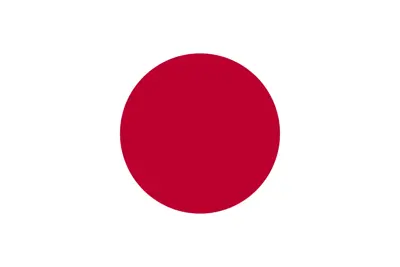
Japan (or Nippon) is an island country in East Asia. Located in the Pacific Ocean, it lies to the east of the Sea of Japan, the East China Sea, China, Korea and Russia, stretching from the Sea of Okhotsk in the north to the East China Sea and Taiwan in the south. The kanji that make up Japan's name mean "sun origin", and it is often called the "Land of the Rising Sun".
