Japan Quotes
The Emperor is the head of the Empire, combining in Himself the rights of sovereignty, and exercises them, according to the provisions of the present Constitution. [1889 Constitution] The Emperor shall perform only such acts in matters of state as are provided for in this Constitution and he shall not have powers related to government. [1946 Constitution]
Japanese Constitution, Article 4
Sourced by: Eigen's Political and Historical Quotations


See {43619} for a contradictory view of the Emperor.

Even some who bought the party line that the Emperor had personally not started the war or the other incursions, blamed the Emperor for his inaction.

The statement so offended the Lords—the highest court of England—that he was imprisoned by the Lords and not released until he had recanted the position. The argument goes on today in many countries incuding the United States.

Typical of the times, the king was accountable to no one for anything. 200 years later, most of the world have accepted the principle that no one is above the law and that every leader is accountable to the people.


The priest had come to the Empress to complain about the debauchery of her Prime Minister and made the error of describing him as the first man of the empire. The story may be apocryphal but it illustrates the character of the Empress. The source of the exact words are given in the historical novel, Luise Muhlbach, Joseph II. and His Court

Cromwell was not opposed to monarchy per se as long as it was reasonably checked. He saw Charles II as a terrible monarch. After deposing Charles, he and his associates had to come up with some form of government. As “Lord Protector” he was a de facto monarch without the trappings.

The Emperor of Japan and his family at the time controlled a large part of Japanese wealth. There were some criticisms emerging.

This letter was written shortly after the Constitution had been signed by the convention delegates. This difference between Adams and Jefferson would be at the heart of the first great partisan struggle in American history. Adams, as the second President, tried to increase and use the power of the Presidency. Jefferson opposed him, especially when Adams tried to run for a second term. The Adams-led Federalists were pitted against Jefferson’s Democratic Republicans in the first, and perhaps still the most bitter partisan struggle in American political history. The Jeffersonians accused Adams and the Federalists of trying to unravel the American Revolution and revert to a monarchy. The people not only sided with the Democratic Republicans, ousting Adams, but also turned out most of the Federalists. It was the end of the Federalist Party, and a new conservative party—without monarchial tendencies—the Whigs became the new opposition party.

In the British Constitutional Monarchy of the Victorian Era, the Queen still possessed enormous power and many in Parliament was constantly trying to have Parliament assume many of the Queen’s powers. The Prime Minister was in an awkward position. On the one hand, he was the Queen’s Prime Minister and leader of HER government. At the same time he was the leader of the political party that had won the last Parliamentary election. His party was trying to usurp some of the Queen’s powers and Peel explained to the Queen’s assistant that he would generally side with the Queen against his own party. It is doubtful that Anson and the Queen believed Peel on this point as his position as Prime Minister depended not on his being elected by the voters but by his party members of Parliament. In modern times, the British monarch has few real powers but is still very influential so there are no struggles over power with Parliament.

Actually, Queen Elisabeth II, at that time the Queen of England, was very sophisticated about the policies of the nation. Chomsky’s point was not that the Queen was ignorant; it was that her role is ceremonial and it is not critical or even material that the monarch in a Constitutional Democracy understands or approves of the government program that is being presented.


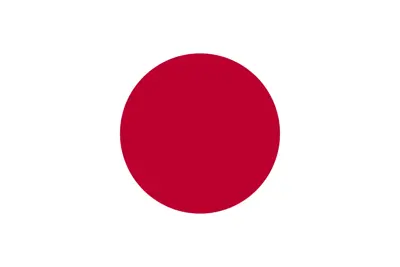
Japan (or Nippon) is an island country in East Asia. Located in the Pacific Ocean, it lies to the east of the Sea of Japan, the East China Sea, China, Korea and Russia, stretching from the Sea of Okhotsk in the north to the East China Sea and Taiwan in the south. The kanji that make up Japan's name mean "sun origin", and it is often called the "Land of the Rising Sun".
