Samuel Johnson Quotes
[Sir Robert] Walpole was a minister given by the King to the people. [William] Pitt [the Elder] was a minister given to the King—as an adjunct.
Samuel Johnson, 1709-1784, English Writer & Lexicographer, Boswell's The Life of Samuel Johnson, LL.d. 1772
Sourced by: Eigen's Political and Historical Quotations

Cromwell was not opposed to monarchy per se as long as it was reasonably checked. He saw Charles II as a terrible monarch. After deposing Charles, he and his associates had to come up with some form of government. As “Lord Protector” he was a de facto monarch without the trappings.


1st Earl of Beaconsfield


His immediate frustration was the title form of address first selected by Congress for the President. See {586767}

Adams was one of those who felt that the President and Vice President should have some Title of official respect like “Your Highness.” That was a very controversial issue at the time. See {586769}. However, most public opinion thought that was a throwback to monarchy. Adams was thereafter derided for being a monarchist.

This was a dramatic assertion at the time, even for England with it’s Magna Carta.

The statement so offended the Lords—the highest court of England—that he was imprisoned by the Lords and not released until he had recanted the position. The argument goes on today in many countries incuding the United States.


Because of the contested Electoral College vote in the 1876 election, a special commission was set up by Congress to decide "as to which is the true and lawful electoral vote" from those states where more than one return was recorded by the College. On March 2, Republican Rutherford B. Hayes was selected President over Samuel Tilden.


Dulles was slated to become Secretary of State when Dewey won the presidency. Dewey was the overwhelming favorite, yet Truman upset Dewey. Four years later, Dulles became Eisenhower's Secretary of State.


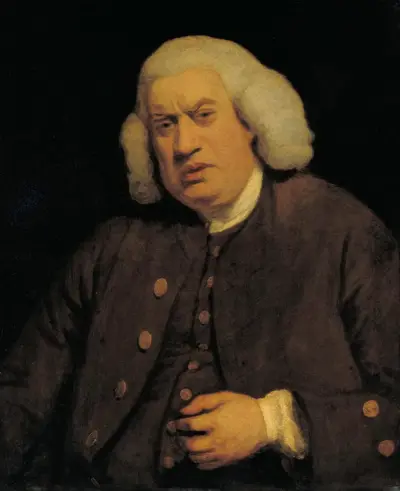
Samuel Johnson, often referred to as Dr Johnson, was an English writer who made lasting contributions to English literature as a poet, playwright, essayist, moralist, literary critic, biographer, editor, and lexicographer. Religiously, he was a devout Anglican, and politically a committed Tory. The Oxford Dictionary of National Biography describes Johnson as "arguably the most distinguished man of letters in English history". He is the subject of James Boswell's The Life of Samuel Johnson, described by Walter Jackson Bate as "the most famous single work of biographical art in the whole of literature".
