Thomas Tudor Tucker Quotes
With Concern I perceive that it has infused into the Minds of People here the most intolerable Rage for Monarchy that can be imagined. Verily I believe that a very great proportion are ripe for a King & would salute the President as such with all the Folly of Enthusiasm.
His immediate frustration was the title form of address first selected by Congress for the President. See {586767}
Thomas Tudor Tucker, 1745-1828, U. S. Congressman (Democrat, SC), Letter to his brother, St. George Tucker, May 13, 1789, .
Sourced by: Eigen's Political and Historical Quotations

There were great debates in the first Congress over the proper form of address of the President and the Vice President. A title for the President was finally selected {586767} which met with the approval of the Congressman as others had wanted much longer and more elaborate titles like those of the crowned heads of Europe. However there were those who thought the title disgustingly formal. See {586765}.

The title infuriated many who thought is was too much like a monarchy. For an example, see {586765}.


Typical of the times, the king was accountable to no one for anything. 200 years later, most of the world have accepted the principle that no one is above the law and that every leader is accountable to the people.

The statement so offended the Lords—the highest court of England—that he was imprisoned by the Lords and not released until he had recanted the position. The argument goes on today in many countries incuding the United States.

The king's son, Prince Albert had dropped some papers and was instructed by the king to pick them up himself rather than allow the servants to do it.


The issues of check and balances in the American constitution were radical by world standards of the day. However, it was by no means an new concept and as this quotation illustrates was discussed and debated in England, but although England was far ahead of almost all other countries with respect to eliminating absolute power, they never took it as far as the Americans did. That took a revolution.

Khomeini was a politician as well as a cleric. He was not always consistent depending on his audience. This book was the publication of 17 different speeches with different audiences. Here he opposes all monarchy, but there is little doubt that his main target was the monarchy of Saudi Arabia. In {620335} he suggests that monarchy would be acceptable if the monarch followed Islamic law. Here he leaves no room for monarchies of which there were and are a number in the Muslim world. And at the height of Islam there was a Caliph who not only had absolute rule of ALL Muslim countries, but he was the absolute ruler of the religion. The Caliph and later the Islamic Sultan held more absolute power than any king or Pope ever had. Most of the Islamic fundamentalists claim that they want a return to having a Caliph with absolute power. And even in Iraq today, the “Supreme Leader” exercises more autonomous power, than any monarch or dictator does in his own country.

Beaumarchais served the French King Louis XVI as a spy and advisor on foreign affairs. He was instrumental in influencing the French King and his government to tilt in favor of the American Revolutionaries. Beaumarchais’s reaction to the English was typical of European royalists who saw the political infighting and turmoil of a parliamentary government as frantic and destabilizing. Ironically, most Frenchman preferred it and that led to the French Revolution.

Cromwell was not opposed to monarchy per se as long as it was reasonably checked. He saw Charles II as a terrible monarch. After deposing Charles, he and his associates had to come up with some form of government. As “Lord Protector” he was a de facto monarch without the trappings.


Many American colonists had relatives and friends in England, and Paine argued that American independence would help and not het the English people.


Publicly warning Louis Napoleon against his adventure in Mexico:


James was then the Duke of York. James’ brother, Charles II, wore the crown and he later would be forced to flee to France by the Parliamentary forces . The Duke understated the degree to which the Parliamentary forces were prepared to go in the days which English historians call the English Interregnum.
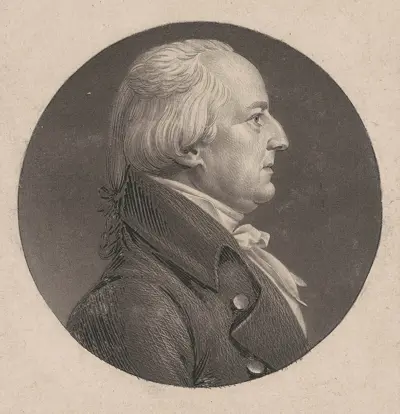
- Born: June 25, 1745
- Died: May 2, 1828
- Nationality:
- Profession: Doctor
Thomas Tudor Tucker was a Bermuda-born American physician and politician representing Charleston, South Carolina. He was elected from South Carolina in both the Continental Congress and the U.S. House. He later was appointed as Treasurer of the United States and served from 1801 to his death in 1828, establishing a record as the longest-serving Treasurer.
