Stanley Baldwin Quotes
There are three groups that no British Prime Minister should provoke: The Vatican, the Treasury and the miners.
1st Earl Baldwin of Bewdley
Stanley Baldwin, 1867-1947, British Prime Minister (Conservative), Quoted in Butler, The Art of Memory
Sourced by: Eigen's Political and Historical Quotations


In a democracy, some politicians come to power in good or average times. Others, come to power with the nation in extremis. Churchill. Privately confided to a friend that he was not exactly happy. However, he had served as Prime Minister before and under the even more difficult conditions of WWII. In American, Abraham Lincoln, Franklin Delano Roosevelt, and Barack Obama all came to power when the nation was in great difficulty. In Lincoln’s case, there was secession and rebellion. With FDR it was the Great Depression. In Obama’s case, there were two wars and the worst economic conditions since the Great Depression, yet all 3 men did not seem to have Churchill’s misgivings.

1st Earl of Beaconsfield


This is a fascinating historical quotation about labor disputes and strikes. The conservatives at the beginning of the 20th century were horrified at the idea of a strike of any kind. Their idea of a labor dispute with picketing would allow one or two protesters with signs stating their case to stand outside the factory. Or one person visiting a worker and suggesting that the worker not work during the strike. However, when the degree of passion was expressed by many people picketing they were opposed. At the time, the working class and the unions had no other resources other than the bodies of their workers. They could not advertise, publish newspapers, hire lobbyists to explain their point of view to Parliament. The conservatives then were then very undemocratic and believed that the monarchy with a responsible aristocracy of the upper class should run the nation for all. They WERE actually intimidated by a large number of people doing anything that was not endorsed by or approved by the ruling class. Women in large protest marches for the right to vote were intimidating also. The threat was, as they saw it, “Do as we demand or we will bring down the world as you know it.” In a sense that is what happened. There is no conservative in England who would today deny a union the right to picket with many people.


This was praise indeed as Wellman was generally very conservative.

Windsor was the Kings palace and the King felt that was all he really controlled.
As a result of Henry VIII establishing himself as the head of the Church in England and Ireland in place of the Pope, Henry’s heirs also became head of the Church. And that was the role that Queen Elisabeth had inherited in addition to the Crown. Many of those loyal to the Pope found most offensive the fact that a woman was making decisions for men and women on matters of faith. A Papal representative travelled with FitzGerald and probably helped him compose this document of which this is but 2 sentences. He may have drafted it completely. The Pope was a factor in many of the Irish rebellions against the English, and this caused great suspicion of all English Catholics whose loyalty to the Queen was in conflict with their loyalty to the Pope who was plotting for a Catholic takeover of England and Ireland.

Wycliffe, although a Roman Catholic, was an early reformist. He not only opposed the Pope vis a vis King Edward of England, but he went against church doctrine and printed the first English Bible. He was burned at the stake.

The assumption of one supreme authority being necessary for a state, has been the most common assumption in almost all cultures and times before the American Revolution. What is amazing is that the Founding Fathers rejected this notion in favor of our complex system of checks and balances restrained by a Constitution which no society had ever tried before. England in contrast as it became more democratic, simply shifted the supreme, uncontrollable entity from the King to the Parliament which it is even today. Parliament can do virtually anything unrestrained by anything except their judgment and tradition.


A number of the British Parliament were opposed to using force to get America to accept British taxation and other rules. They thought the trade with America was excellent for both, and the military advantage of the combination was superior to any force on earth. To upset that over who had the right to tax and under what conditions seemed foolish. They counseled negotiations. It was thought at the time that Lord North, the Prime Minister, was perceived to be a hard liner who would not back down regarding America. This quotation describes papers that the professor found that proved that Lord North was not one of the hawks and did not want to send troops to America. However, the King was insistent as he and his hawkish advisors felt that England and the king would be weakened if the world could see America flouting the king. It was a “domino theory” of the effect on all the colonies. North wanted to resign but the king thought him the only competent man in the kingdom who could manage the government and would not allow North’s resignation. The Prime Minister, as a loyal servant of the King, executed the policy he thought unwise and used his political skill to marshal and maintain a majority for a hard line in Parliament. Apparently, he tried to resign over America on several occasions. The world would be very different place had he successfully resigned.


Many American colonists had relatives and friends in England, and Paine argued that American independence would help and not het the English people.

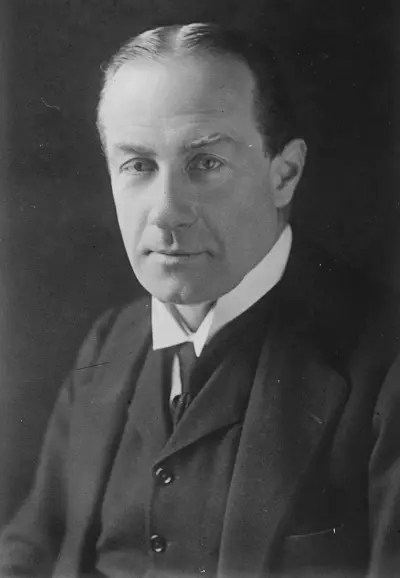
Stanley Baldwin, 1st Earl Baldwin of Bewdley, KG, PC, PC (Can), JP, FRS was a British Conservative statesman who dominated the government of the United Kingdom between the world wars, serving as Prime Minister on three occasions.
