Margaret Chase Smith Quotes
As long as there are big corporations, there will be big unions. The economic power of big business will be matched by the economic power of the big unions.
Smith, Margaret Chase. Declaration of Conscience. Edited by William C. Lewis Jr., Doubleday, 1972.


Roosevelt shocked the conservative members of his own party with this statement. Labor unions were not then an accepted concept in American society. Anti trust legislation and enforcement was in its infancy and companies in an industry commonly conspired as to price fixing, labor negotiations and market share allocations. TR had a scrupulous sense of fairness and equity.


This quotation is extremely subtle. Vidal tells us that he has always hated organized labor. He also tells us that the media has always given us one monolithic view of organized labor. He is silent as to whether that view was accurate and justified or in his mind or whether he was just going along with the image created by the media. There is no answer, but it is a quotation that is food for thought. Numerous studies found that at the beginning of the 21st century, the public view of labor union crooked and/or communist leaders was much worse than reality.


Almost all unions generally support the Democratic Party and labor is generally unified behind the Democrats. However, whenever union solidarity is breached and one or two major labor unions support the Republicans they almost always win.

The unions that broke off were very successful at increasing union membership and made large efforts at organizing. The others were losing members for the most part and devoted most of their resources to politics to protect what they had.
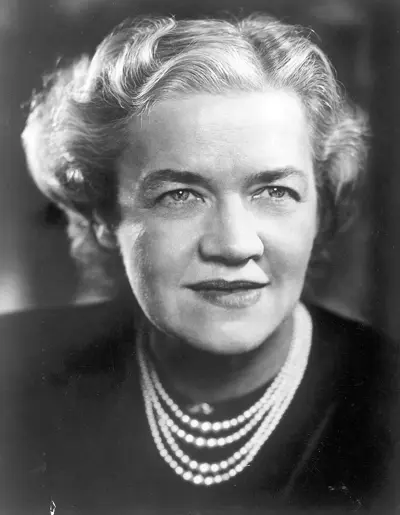
Margaret Madeline Chase Smith was an American politician. A member of the Republican Party, she served as a U.S Representative (1940–49) and a U.S. Senator (1949–73) from Maine. She was the first woman to serve in both houses of the United States Congress, and the first woman to represent Maine in either. A moderate Republican, she was among the first to criticize the tactics of Joseph McCarthy in her 1950 speech, "Declaration of Conscience". Smith was an unsuccessful candidate for the Republican nomination in the 1964 presidential election, but was the first woman to be placed in nomination for the presidency at a major party's convention.
