Samuel Gompers Quotes
Where trade unions are most firmly organized, there are the rights of the people most respected.
Gompers, Samuel. Labor and the Employer. Compiled by Hayes Robbins, E. P. Dutton & Company, 1920, p. 36.


Vladimir Lenin


At the time there was very little such legislation or regulation, and the little there was only occurred after massive lobbying efforts by organized labor. In modern times, often it takes a horrible tragedy to occur before the political will can be mobilized to cope with issues of occupational health and safety.


Roosevelt shocked the conservative members of his own party with this statement. Labor unions were not then an accepted concept in American society. Anti trust legislation and enforcement was in its infancy and companies in an industry commonly conspired as to price fixing, labor negotiations and market share allocations. TR had a scrupulous sense of fairness and equity.


Bear was the classic icon of the wealthy, insensitive, powerful, prejudiced snob. He even made other capitalists somewhat sympathetic to the complaints about corporations. See {593878} and {593879}.


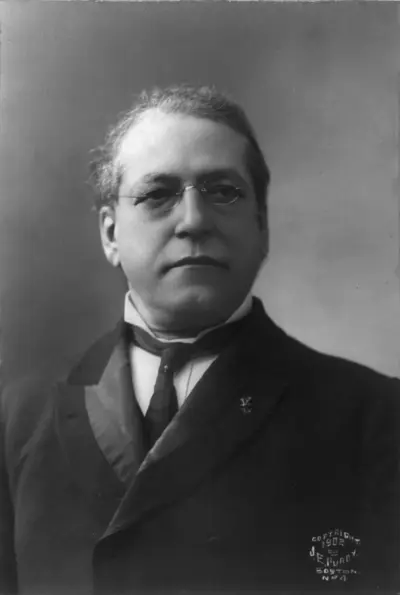
Samuel Gompers was a British-born American cigar maker, labor union leader and a key figure in American labor history. Gompers founded the American Federation of Labor (AFL), and served as the organization's president from 1886 to 1894, and from 1895 until his death in 1924. He promoted harmony among the different craft unions that comprised the AFL, trying to minimize jurisdictional battles. He promoted through organization and collective bargaining, to secure shorter hours and higher wages, the first essential steps, he believed, to emancipating labor. He also encouraged the AFL to take political action to "elect their friends" and "defeat their enemies". He mostly supported Democrats, but sometimes Republicans. He strongly opposed Socialists. During World War I, Gompers and the AFL openly supported the war effort, attempting to avert strikes and boost morale while raising wage rates and expanding membership.
