Gore Vidal Quotes
I shared, naturally, in that hatred of organized labor which has been the one political constant in my lifetime…. No alternative view of organized labor has ever come to us through the popular media. If labor leaders were not crooks like Jimmy Hoffa, they were in the pay of Moscow.
This quotation is extremely subtle. Vidal tells us that he has always hated organized labor. He also tells us that the media has always given us one monolithic view of organized labor. He is silent as to whether that view was accurate and justified or in his mind or whether he was just going along with the image created by the media. There is no answer, but it is a quotation that is food for thought. Numerous studies found that at the beginning of the 21st century, the public view of labor union crooked and/or communist leaders was much worse than reality.
Gore Vidal, 1925–2012, Author & Unsuccessful Candidate for Congress, Screening History Fire Over England,1992
Sourced by: Eigen's Political and Historical Quotations


Almost all unions generally support the Democratic Party and labor is generally unified behind the Democrats. However, whenever union solidarity is breached and one or two major labor unions support the Republicans they almost always win.


Darrow defended many labor leaders and organizers who had been accused of various wrongdoings—sometimes fairly and often on trumped up charges:. In a 1930 letter to Mark Sullivan he further explained:


The notion that President Theodore Roosevelt could be terrorized was absurd on its face. He faced down everyone; one of the reasons he was so popular. But Van Cleave and his organization was paranoid about organized labor. It is they who were terrorized. Van Cleave was rabidly opposed to any anti-trust government “interference” with business and he was also virulently opposed to labor unions. See {638612}, {638615}, {638614}, and {638613}.


This was praise indeed as Wellman was generally very conservative.

Vladimir Lenin


The act gave unions rights of organization which they had not had before in America, but few critics ever characterized it in the over the top rhetoric which was characteristic of Nixon in his early political years.
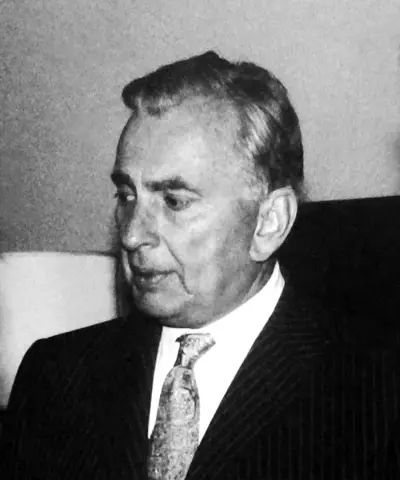
Eugene Luther Gore Vidal was an American writer and public intellectual known for his epigrammatic wit, patrician manner, and polished style of writing. Vidal was openly bisexual and his novels often dealt with LGBT characters, which was unusual at the time. Beyond literature, Vidal was heavily involved in politics. He twice sought office—unsuccessfully—as a Democratic Party candidate, first in 1960 to the United States House of Representatives (for New York), and later in 1982 to the U.S. Senate (for California).
