Richard Nixon Quotes
The New Deal Congress enacted the National Labor Relations Act which granted unrestricted sovereign power to the barons of union labor.
The act gave unions rights of organization which they had not had before in America, but few critics ever characterized it in the over the top rhetoric which was characteristic of Nixon in his early political years.
Richard M. Nixon, 1913-1994, 37th President of the United States (Republican, CA), Maiden Speech in the U. S. House of Representatives, 1947
Sourced by: Eigen's Political and Historical Quotations


Vladimir Lenin


This quotation was reprinted and widely distributed by the CIO in its 1936 organizing drive of the Ford Motor Company


At the time, most company owners and managers refused to bargain collectively with employee elected organizations. Hoover was then an exceptionally modern business person who realized the importance of good working relations between management and labor and advocated collective bargaining. However, as he got deeper into partisan politics, he backed off urging this. Nationally, in the 1960s collective bargaining had become an instrument of basic sound management, but more and more managements returned to simply refusing to bargain with employee organizations and instead strengthened their managers and supervisors and adopted (by choice and by government regulation) more and more modern, healthy, safe, efficient and attractive working conditions and policies. By the 21st century, labor unions and employee organizations had lost their attractiveness while managers were more attentive to workers and there were very few private companies engaged in collective bargaining.


Roosevelt shocked the conservative members of his own party with this statement. Labor unions were not then an accepted concept in American society. Anti trust legislation and enforcement was in its infancy and companies in an industry commonly conspired as to price fixing, labor negotiations and market share allocations. TR had a scrupulous sense of fairness and equity.


The notion that President Theodore Roosevelt could be terrorized was absurd on its face. He faced down everyone; one of the reasons he was so popular. But Van Cleave and his organization was paranoid about organized labor. It is they who were terrorized. Van Cleave was rabidly opposed to any anti-trust government “interference” with business and he was also virulently opposed to labor unions. See {638612}, {638615}, {638614}, and {638613}.


This was praise indeed as Wellman was generally very conservative.


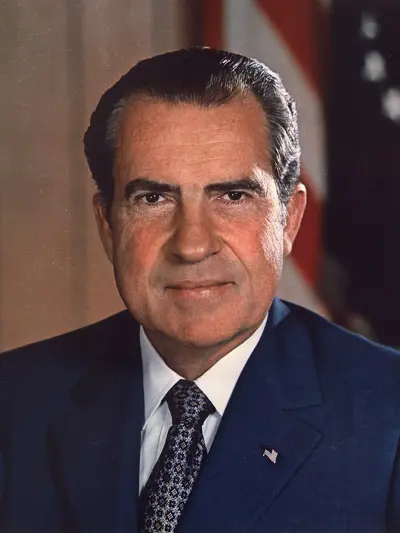
Richard Milhous Nixon was the 37th president of the United States, serving from 1969 to 1974. A member of the Republican Party, Nixon previously served as the 36th vice president from 1953 to 1961, having risen to national prominence as a representative and senator from California. After five years in the White House that saw the conclusion to the U.S. involvement in the Vietnam War, détente with the Soviet Union and China, and the establishment of the Environmental Protection Agency, he became the only president to resign from the office, following the Watergate scandal.
