Bhumibol Adulyadej Quotes
Section 7 of the Constitution doesn't grant a power for the king to do whatever he wishes.
Adulyadej, Bhumibol. Royal Address to Judges of the Supreme Administrative Court and the Supreme Court, Bangkok, April 25, 2006. Bureau of the Royal Household, 2006.


President George W. Bush had ignored a federal law and tapped the phones of Americans without probable cause and a warrant issued by a court. The President’s defenders argued that the President, as Commander in Chief, has the Constitutional responsibility to lead the military and protect the nation. Intelligence gathering is part of military activity. Therefore the intelligence gathering is a Constitutional duty and the Congress, under the separation of powers doctrine, may not interfere with the President’s Constitutional Duty to conduct intelligence. Under this doctrine, the President need not obey laws that he believes impinge on his management of the war effort and the defense of the nation. Most legal scholars believe that this argument is nonsense, but the George W. Bush administration has stated the doctrine and it was the subject of much litigation.

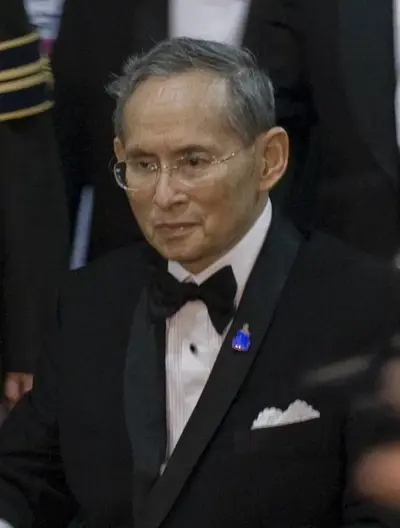
Bhumibol Adulyadej, conferred with the title King Bhumibol the Great in 1987 (officially conferred by King Vajiralongkorn in 2019), was the ninth monarch of Thailand from the Chakri dynasty, titled Rama IX. Reigning since 9 June 1946, he was the world's longest-reigning current head of state from the death of Emperor Hirohito of Japan in 1989 until his own death in 2016, and is both the second-longest reigning monarch of all time and the longest-reigning monarch to have reigned only as an adult, reigning for 70 years and 126 days. During his reign, he was served by a total of 30 prime ministers beginning with Pridi Banomyong and ending with Prayut Chan-o-cha.
