George Frisbie Hoar Quotes
The most eminent Senators would have received as a personal affront a private message from the White House expressing a desire that they should adopt any course in the discharge of their legislative duties that they did not approve. If they visited the White House, it was to give, not to receive advice.
George Frisbie Hoar, 1826-1904, U. S. Congressman & U. S. Senator (Republican, MA), Autobiography
Sourced by: Eigen's Political and Historical Quotations


The Senate was investigating a scandal where the George W. Bush White House had induced the Attorney General, Alberto Gonzalez, to fire 8 of their own political U. S. Attorney appointments because they had or were investigating/prosecuting Republican politicians for corruption or not prosecuting Democrats vigorously enough. Gonzalez took the responsibility for the firings but did “not remember” why each had been fired nor was there any record in the Justice Department indicating any shortcoming with their jobs. The White House political operatives refused to testify under oath citing “Executive Privilege.”

The sarcasm refers to the power usually held by key committee chairmen and the influence of the White House on Congressional legislation—especially budgetary.


President Abraham Lincoln had pocket vetoed his own party's reconstruction bill in the midst of an election year.


President Andrew Johnson had been impeached by the House of Representatives and was being tried in by the Senate. A majority of the Senators voted for conviction but the vote was 1 short of the two-thirds that were needed. Johnson remained in office. These were two of the charges against Johnson. A Century later Presidents commonly did both of these. George W. Bush made reappointment of Senate rejected nominees into an art form but after the Johnson trial, these were never to be considered reasons for impeachment again.

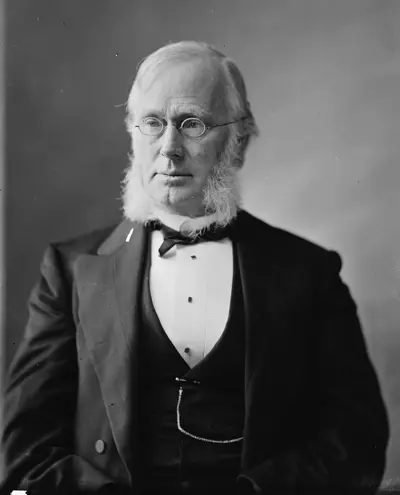
George Frisbie Hoar was a prominent American politician and United States Senator from Massachusetts from 1877 to 1904 who belonged to an extended family that became politically prominent in 18th- and 19th-century New England.
