Ambrose Bierce Quotes
In the U.S. Senate a quorum consists of the chairman of the Committee on Finance and a messenger from the White House.
The sarcasm refers to the power usually held by key committee chairmen and the influence of the White House on Congressional legislation—especially budgetary.
Ambrose Bierce, 1842-1914?, Journalist & Political Columnist, The Devil's Dictionary, 1911
Sourced by: Eigen's Political and Historical Quotations


His main reason for believing this is that all appropriations bills must be initiated by the House of Representatives. Lobbyists therefore often give the House more attention than the Senate.


Monroe was then Secretary of State.


Vidal, a staunch liberal held this view along with many ultra conservatives end extreme liberals. The constitution requires the Congress to declare war, but they have not done so for any of the wars since WWII. The President assumed the war power. And the only coherent budgets began.

His role was the equivalent of the Mayor of Washington DC. Even though the Congress had generally been the most powerful branch of the government, public opinion on this was beginning to shift at the turn of the 20th century.


The issue of how to address the President and Vice President was very controversial. To much respect and the President would appear to be a monarch; to little and he might not be taken seriously enough. See {586768}.


President Abraham Lincoln had pocket vetoed his own party's reconstruction bill in the midst of an election year.

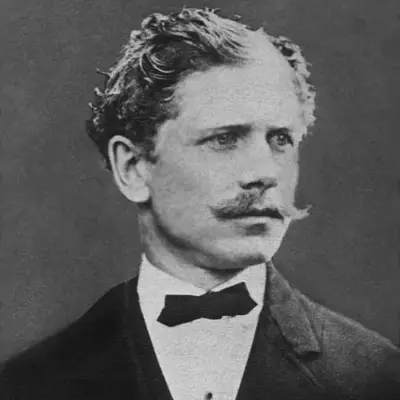
Ambrose Gwinnett Bierce was an American short story writer, journalist, poet, and Civil War veteran. His book The Devil's Dictionary was named as one of "The 100 Greatest Masterpieces of American Literature" by the American Revolution Bicentennial Administration. His story "An Occurrence at Owl Creek Bridge" has been described as "one of the most famous and frequently anthologized stories in American literature"; and his book Tales of Soldiers and Civilians (also published as In the Midst of Life) was named by the Grolier Club as one of the 100 most influential American books printed before 1900.
