Charles Sumner Quotes
The powers of the Senate over appointments were trifled with and disregarded by reappointing persons who had been already rejected …. The veto power conferred by the Constitution as a remedy for ill-considered legislation, was turned by him into a weapon of offence against Congress
President Andrew Johnson had been impeached by the House of Representatives and was being tried in by the Senate. A majority of the Senators voted for conviction but the vote was 1 short of the two-thirds that were needed. Johnson remained in office. These were two of the charges against Johnson. A Century later Presidents commonly did both of these. George W. Bush made reappointment of Senate rejected nominees into an art form but after the Johnson trial, these were never to be considered reasons for impeachment again.
Charles Sumner, 1811-1874, U. S. Senator (Democrat, Free Soiler and Republican, MA), Opinion on the trial of Andrew Johnson, 1868
Sourced by: Eigen's Political and Historical Quotations


Alberto Gonzalez, White House Counsel and later Attorney General who was forced to resign and David S. Addington, Counsel to the Vice President, had come up with a novel view of the powers of the presidency. They argued that since the President is the Commander in Chief, in a war situation or intelligence gathering thereto, has the Constitutional responsibility for that function, he need not obey any laws of Congress as in the conduct of the war Congress would be impinging on the Constitutional separation of powers which itself was prohibited by the Constitution. The argument did not find any significant legal support but for a while the George W. Bush White House behaved as if this were the law, despite the fact that even in the American Revolution and the War of 1812 Congress passed laws regulating the conduct of the armed forces as is provided for in other parts of the Constitution. Yet even Goldsmith would allow the President some powers that many think are unconstitutional and/or belong to Congress. See {32436}.

President Coolidge had nominated Charles Beecher Warren as Attorney General but the Senate with his own party in the majority rejected the nomination as Warren had been closely connected with the Sugar Trust. Coolidge, refused to accept the Senate decision and renominated Warren and threatened that if the Senate would not confirm Warren, be would give him a recess appointment after the Senate adjourned:. The statement was written for a Senate speech but never delivered as such. Warren was rejected by the Senate a second time, and the President indeed offered him a recess appointment, but Warren refused.

His main reason for believing this is that all appropriations bills must be initiated by the House of Representatives. Lobbyists therefore often give the House more attention than the Senate.


Senators have throughout our history used their power of treaty ratification to encroach on the executive branch and participate in the actual negotiations of treaties. President’s like McKinley to avoid non ratification actually appointed 3 senators to his 5 man treaty negotiating team. The 2/3 super majority is a high hurdle for ratification and presidents have always tilted with the Senate on treaties.


This notion seems to have first been expressed by Edward S. Corwin in 1940

The view that the Supreme Court was the final arbiter of constitutional controversies was not held in early America.

The issue of how the federal judiciary would be selected was one of the more hotly debated issues during the Constitutional Convention.

A veto power for the President would be absurd because


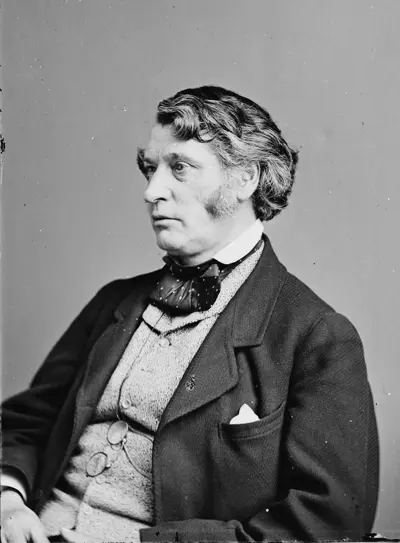
Charles Sumner was an American statesman and United States Senator from Massachusetts. As an academic lawyer and a powerful orator, Sumner was the leader of the anti-slavery forces in the state and a leader of the Radical Republicans in the U.S. Senate during the American Civil War. During Reconstruction, he fought to minimize the power of the ex-Confederates and guarantee equal rights to the freedmen. He fell into a dispute with President Ulysses Grant, a fellow Republican, over the control of Santo Domingo leading to the stripping of his power in the Senate and his subsequent effort to defeat Grant's re-election.
