George Washington Quotes
The Hon. Continental Congress having been pleased to allow a Chaplain to each Regiment, with the pay of Thirty-three Dollars and one third per month--The Colonels or commanding officers of each regiment are directed to procure Chaplains accordingly; persons of good Characters and exemplary lives--To see that all inferior officers and soldiers pay them a suitable respect and attend carefully upon religious exercises. The blessing and protection of Heaven are at all times necessary but especially so in times of public distress and danger--The General hopes and trusts, that every officer and man, will endeavor so to live, and act, as becomes a Christian Soldier defending the dearest Rights and Liberties of his country....
This quotation is very interesting in that it is used by people on both sides of the church & state issue. The Continental Congress had ordered that military chaplains be supplied & paid with very scarce public funds. Further that they be Christian & that soldiers respect them and attend compulsory Christian services. Some argue that this meant that the Continental Congress had intended the United States to be a Christian Country & had no problem with public money used to support Christian worship. Nor with compulsory Christian services. They note that Washington himself ordered the compulsory services. Separation of Church and State advocates point out that this was such an abuse that when the Constitution was voted in 1787, a majority of the states would not ratify it until the 1st Amendment would eliminate any chance of those abuses being repeated. Washington was only the Commander in Chief and was subservient to Congress which he & the army depended on for supplies & pay.
George Washington, 1732-1799, 1st President of the United States (VA), General Order to His Troops, Issued from New York, July 9, 1776
Sourced by: Eigen's Political and Historical Quotations

The Continental Army needed everything from uniforms to muskets, mules to food. The British were mobilizing in force. General Washington was pleading for material assistance. Some members of Congress thought the spiritual was as, if not more important. See {583803} for other Continental Congress spiritual contributions to the war effort.


Carter was personally one of the most religious of our Presidents.


Judge Moore was trying to justify oaths to God or other state references to a Judeo-Christian God as not violating the 1st Amendment stricture about the government endorsing a particular religion. Note however his {33827} quotation.

Public money had traditionally been spent to support shrines of Muslim saints. Ataturk ended such subsidies.

He was communicating the Resolution of the Continental Congress.

This is one of the earliest expressions of the first regarding freedom of religion. Note that there was concern about the possible government negative effects on religion as well as the other way around. The Continental Congress was very disparate & often inconsistent. Four months after this passed, the Continental Congress voted to have & pay Christian Protestant Chaplains for the army despite a critical shortage of funds. Further they ordered Washington to require the troops to attend Christian religious services which the General did. After this statement, many Protestant clergy objected. Congress actually depended on the clergy to communicate with the public & prepared many open letters which the asked the clergy to read from the pulpit—especially ones recruiting troops. With the Revolution going badly, the Congress & Washington did not want a dispute with the clergy many of whom were already being pressured against the revolution by their religious superiors in England.

Left before it ended.

The phrase was picked up by the press, and then became the title to a patriotic song of World War II.


This is sd oppoded to in compsnies, universitiesd, governments, snf other insitutions.
This would be like an American President firing the congressional chaplains. However this is only one small, but telling, example of Atatuk’s secularization of the nation which had a great deal to do with Turkey becoming a modern great power—by far the strongest and most developed of the Islamic world.


Philip II, by this statement, and his subsequent behavior, made a major step forward in France for the separation of church and state. Previously, French kings played a major part in the selection of the bishops and other high clerics of the realm. Phillip ceased that type of interference. He did however, close down a religious commune for misbehavior, but that was at the request of both the church and civil authorities. See {617074} . The religious authorities at the time were delighted with this form of separation of church and state, but they were adamant that their church should be able to influence the monarchy and laws of the realm. In contrast today, the Chinese government does not allow any religion to interfere with the operation of the government, but insists that the Dali Lama and the Bishops of the Catholic church can only be appointed with their approval. Separation of church and state is a two way phenomenon.

For those who doubt that there was intended a rigid separation between church and state, they have but to contemplate this passage. However, at about the same time, the State of South Carolina moved in its constitution in an opposite direction. See {612573}. When the framers of the Constitution met in 1787 in Philadelphia the separation of church and state issue was not really resolved and awaited the Bill of Rights where the separatists won out.

The Supreme Court had ruled school prayer illegal. Many religious people were distressed and turned to the President:


This quotation is the first prayer of the first Congress. Some advocates of a more religious role in government use this quotation to illustrate that not only was religion a part of the first Congressional deliberations, but it was a Christian prayer. Of course, the Constitution would not be created for another 13 years and there was no provision for separation for church and state in the Continental Congress—there was not even an executive. Duche was later captured by the British and was persuaded to write a letter to George Washington {583740} asking that he lay down his arms. John Adams described him to Abagail: “Mr. Duche I am sorry to inform you has turned out an Apostate and a Traytor. Poor Man! I pitty his Weakness, and detest his Wickedness.”

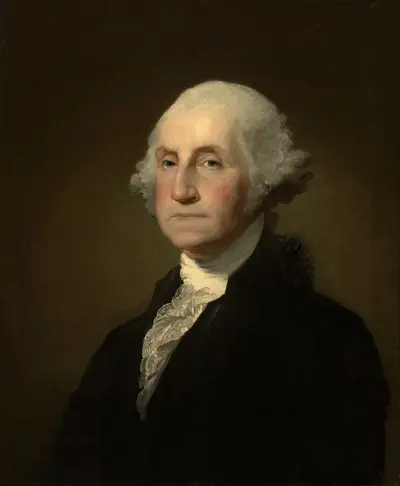
- Born: February 22, 1732
- Died: December 14, 1799
- Nationality: American
- Profession: President
George Washington was the first President of the United States (1789-97), the Commander-in-Chief of the Continental Army during the American Revolutionary War, and one of the Founding Fathers of the United States. He presided over the convention that drafted the current United States Constitution and during his lifetime was called the "father of his country".
