William Livingston Quotes
In times of impending calamity and distress; when the liberties of America are imminently endangered by the secret machinations and open assaults of an insidious and vindictive administration, it becomes the indispensable duty of these hitherto free and happy colonies, with true penitence of heart, and the most reverent devotion, publickly to acknowledge the over ruling providence of God; to confess and deplore our offences against him; and to supplicate his interposition for averting the threatened danger, and prospering our strenuous efforts in the cause of freedom, virtue, and posterity.
The Continental Army needed everything from uniforms to muskets, mules to food. The British were mobilizing in force. General Washington was pleading for material assistance. Some members of Congress thought the spiritual was as, if not more important. See {583803} for other Continental Congress spiritual contributions to the war effort.
William Livingston, 1723-1790, Governor of New Jersey, Member of the First and Second Continental Congress, Proposal to the Continental Congress to have a day of repentance and fasting, March 16, 1776
Sourced by: Eigen's Political and Historical Quotations

This quotation is very interesting in that it is used by people on both sides of the church & state issue. The Continental Congress had ordered that military chaplains be supplied & paid with very scarce public funds. Further that they be Christian & that soldiers respect them and attend compulsory Christian services. Some argue that this meant that the Continental Congress had intended the United States to be a Christian Country & had no problem with public money used to support Christian worship. Nor with compulsory Christian services. They note that Washington himself ordered the compulsory services. Separation of Church and State advocates point out that this was such an abuse that when the Constitution was voted in 1787, a majority of the states would not ratify it until the 1st Amendment would eliminate any chance of those abuses being repeated. Washington was only the Commander in Chief and was subservient to Congress which he & the army depended on for supplies & pay.


Lafayette was so engrossed with fighting in the Revolution that he really did not have a true picture of the total American attitude on slavery. He had fallen in love with the American idea and ideal based on the writings of intellectuals like Paine and Jefferson. Most of his time in America was spent with George Washington. The few American leaders he talked with were Northerners and/or intellectuals who were not rabid enthusiasts for slavery or were opposed. Slavery was so contradictory to the Declaration of Independence, Lafayette assumed that after the war was won and America was independent, the Americans would surely abolish slavery. After the Constitutional Convention many people were disappointed that the delegates had given in to the Southern slavery bloc. None more so than Lafayette.

At that time, Russia and Germany were autocracy, and the ruler could simply take the English money and force the soldiers to fight in a war they had not stake in nor understood.

Lee although born in England was one of the most ardent of the patriots fighiting the British. This oath was even considered extreme at the time. He was considered a super hawk by Washington and others. He became the Senior Major General and if anything had happened to Washington he would have command. He was an extremist who thought himself far more militarily qualified than Washington. See {59589} and {55885} for two of his slights against Washington.

He was communicating the Resolution of the Continental Congress.


The Congress was encouraging all men volunteer for the military and defend the new nation now that the British were landing in force to put down the revolution. By modern language standards, this is a little “over the top” but it shows not only the passion felt by the Congress but the importance they placed on the struggle.


Marion was the initiator of Guerilla Warfare and he and his men traveled lightly spending much time in the South Carolina swamps. They had few supplies and when chased by the British could not stop to hunt. The British called him the “Swamp Fox”. The American colonists at this point still thought of the British as “their countrymen.”


1st Earl of Chatham. The speech was given in the midst of the American Revolution.

This command of the Ancient Prophet Moroni has been interpreted to refer to Facism, organized crime, and Communism at various times. Ezra Taft Benson, the Mormon Secretary of Agriculture in the Eisenhower Administration and later to be President of the Mormon Church, in 1960 claimed that this passage was a warning about International Communism.

This is a remarkable quotation. Because of the issue of plural marriage, many Americans regarded the early Mormons as having no respect for the country or its laws. However, as this quotation shows, the Mormon leader, prophet and founder specifically commanded his people to not only support the United States law but specifically mentions The Constitution. He told his followers that God approves of the United States constitution and states that it is in a sense universal, belonging to all mankind. There is no other religious founder who so thoroughly validated a national constitution and system in the history of the world. Yet he was assassinated and after his death, the United States Government was almost in a full scale war with the Mormons. There is still a vestige of anti-Mormonism in the United States among some Christian Fundamentalists. Yet the Mormon church has been a thoroughly American church, historically, conceptually, and philosophically It has even shared some of the American historical errors such as its sexism and discriminatory rules and view of Blacks. The latter has been remedied {625268} as the rest of America has changed, and the discriminatory role of women is very traditional and is shared with most other Christian fundamentalists and orthodox Jews.

Beaumarchais served the French King Louis XVI as a spy and advisor on foreign affairs. He was instrumental in influencing the French King and his government to tilt in favor of the American Revolutionaries.


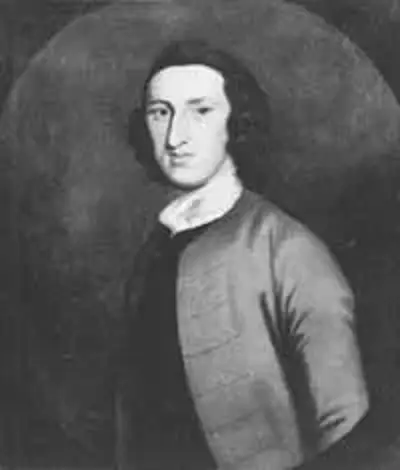
- Born: November 30, 1723
- Died: July 25, 1790
- Nationality:
- Profession:
William Livingston was an American politician who served as the Governor of New Jersey (1776–1790) during the American Revolutionary War and was a signer of the United States Constitution.
