Pierre Beaumarchais Quotes
Every fisherman reduced to poverty by the English, has become a soldier and vows he will avenge the ruin of his family and his country's liberty
Beaumarchais served the French King Louis XVI as a spy and advisor on foreign affairs. He was instrumental in influencing the French King and his government to tilt in favor of the American Revolutionaries.
Pierre Beaumarchais, 1732-1799, French Playwright & Spy, Letter predicting the success of the American Revolution to King Louis XVI, September, 1775
Sourced by: Eigen's Political and Historical Quotations

Lafayette was so engrossed with fighting in the Revolution that he really did not have a true picture of the total American attitude on slavery. He had fallen in love with the American idea and ideal based on the writings of intellectuals like Paine and Jefferson. Most of his time in America was spent with George Washington. The few American leaders he talked with were Northerners and/or intellectuals who were not rabid enthusiasts for slavery or were opposed. Slavery was so contradictory to the Declaration of Independence, Lafayette assumed that after the war was won and America was independent, the Americans would surely abolish slavery. After the Constitutional Convention many people were disappointed that the delegates had given in to the Southern slavery bloc. None more so than Lafayette.


the Dutch monarchy supported by England The French fear of course was that the revolutionary fervor spreading to the bourgeois could easily spread to France, and that is exactly what happened 4 years later. See {639769} for more of his view on the Dutch revolutionary spirit that might infect France.


Most Canadians supported the English despite the letter.
At that time, Russia and Germany were autocracy, and the ruler could simply take the English money and force the soldiers to fight in a war they had not stake in nor understood.


Earlier, his father had also castigated the ministers over their inept hard-line handling of the American Revolution. See {641505} .


See {636935}for the policy decision that triggered this order.

“Patriot” meant someone who was a supporter of anti-monarchy dissidents and rebels. It was more than a good citizen. The prisoners were incarcerated because they had been accused of supporting the monarchy early in or after the French Revolution.


The nobles of the city were in rebellion and fought the English Prince of Wales. When the city was taken, the poor people as well as the nobles were executed for their part in the “rebellion.” However, the poor had no say in the matter, and it was not they who ordered the city gates shut and decided to undergo a siege, which in this case was not successful. Limoges was a heavily walled city, well provisioned for a siege, but the English had miners who undermined part of the city walls and crashed them into the moat and allowed the English to walk in easily.
during and after the American Revolution

There is a , romantic American myth about the Militiamen in Colonial and Revolutionary America—the citizen soldiers who would leave their farms and rise to the military necessity of the day. However, not only were the militia very hard to muster to duty, but most actually didn’t own or have experience with firearms, and the prevailing opinion of knowledgeable military leaders from George Washington on down was that the militia were not very good soldiers. See {613015}, {613016}, {613022}, {613027}, {621987}, {621988}, {613030}, {613033}, & {613056}.


This is a very controversial Franklin quotation. In fact, Franklin never sent this letter to Strahan, but it is one of the most famous of the Franklin quotations. It was even famous in 1775. Franklin saw to it that copies of his “letter” reached most American newspaper editors, many of who reprinted it. It was not the first time that an American politician had made quotations for domestic consumption only, and it certainly was not the last. So Franklin never said this to his friend Strahan, but he did claim that he did to all who Americans who would listen. The result is that Franklin developed a reputation for really ‘telling off those Englishmen.’ This was important for him because since he had many friends and admirers in England, he was suspect to many anti-British Americans.


Eisenhower was then Supreme Allied Commander.

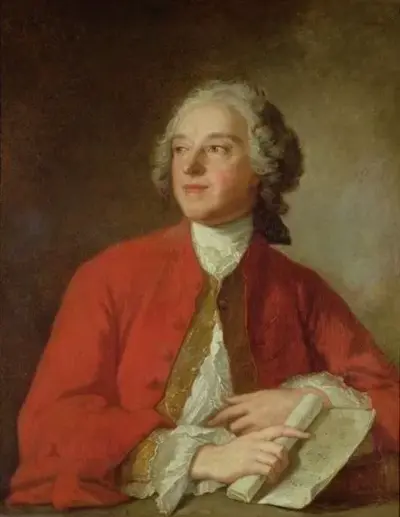
Pierre-Augustin Caron de Beaumarchais was a French polymath. At various times in his life, he was a watchmaker, inventor, playwright, musician, diplomat, spy, publisher, horticulturist, arms dealer, satirist, financier, and revolutionary (both French and American).
