Continental Congress Quotes
We hold sacred the rights of conscience, and may promise to the whole people, solemnly in our name, the free and undisturbed exercise of their religion; and, to the clergy, the full, perfect, and peaceable possession and enjoyment of all their estates; that the government of everything relating to their religion and clergy, shall be left entirely in the hands of the good people of that province, and such legislature as they shall constitute; Provided, however, that all other denominations of Christians be equally entitled to hold offices, and enjoy civil privileges, and the free exercise of their religion, and be totally exempt from the payment of any tythes or taxes for the support of any religion
This is one of the earliest expressions of the first regarding freedom of religion. Note that there was concern about the possible government negative effects on religion as well as the other way around. The Continental Congress was very disparate & often inconsistent. Four months after this passed, the Continental Congress voted to have & pay Christian Protestant Chaplains for the army despite a critical shortage of funds. Further they ordered Washington to require the troops to attend Christian religious services which the General did. After this statement, many Protestant clergy objected. Congress actually depended on the clergy to communicate with the public & prepared many open letters which the asked the clergy to read from the pulpit—especially ones recruiting troops. With the Revolution going badly, the Congress & Washington did not want a dispute with the clergy many of whom were already being pressured against the revolution by their religious superiors in England.
Continental Congress, March 20, 1776
Sourced by: Eigen's Political and Historical Quotations


This is a critical quotation on the government establishment of religion issue. There are a few people who have argued over the years that the Founding Fathers and their culture was religious and where they were careful to avoid favoring one religion over another, they did NOT intend to put atheism on the same equal plane as religion as far as government action is concerned. However, some of the Founding Fathers were atheists, and some others like John Adams were deists—they believed in a God but not in the Trinity or in Judaism or any organized religion. So this quotation makes it clear that the First Amendment does NOT favor religion over non religion or secularism. Atheism must be on an equal footing but not on a higher plane.

This quotation is one of the first to make the critical observation that the only time that tolerance of a religion is necessary is when there is an established church and others that deviate from it. If there is no established church, as the Founding Fathers envisioned, there is no preeminent church to do the tolerating. All are equal. In practice, Protestant churches were proportionately dominant in early America and up through the 20th century. So most of the issue of tolerance problems in America were cultural. And there is still a minority of Christians who believe that America should be a Christian country and other religions should be “tolerated.” However, Clinton and most of the founders did not want to see even general Christianity established as the national religion even they it was the majority religion.


This is a critical quotation on the government establishment of religion issue. There are a few people who have argued over the years that the Founding Fathers and their culture was religious and where they were careful to avoid favoring one religion over another, they did NOT intend to put atheism on the same equal plane as religion as far as government action is concerned. However, some of the Founding Fathers were atheists, and some others like John Adams were deists—they believed in a God but not in the Trinity or in Judaism or any organized religion. So this quotation makes it clear that the First Amendment does NOT favor religion over non religion or secularism. Atheism must be on an equal footing but not on a higher plane.


Prior to Vatican II, freedom of conscience was not explicit in Catholic Doctrine. The controlling view had been that of Pope Pius IX a hundred years earlier. See {612299}.

It is an error to say that. It is an error to say that He was the last Pope to hold temporal power. Years later, the Vatican rejected this view and adopted the modern concept of freedom of conscience. See {612714}.


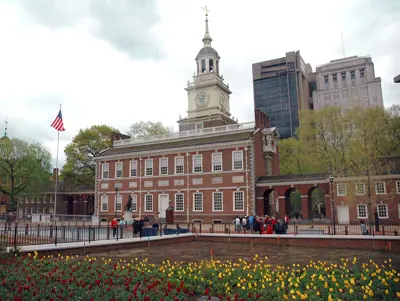
The Continental Congress was a series of legislative bodies which met in the British American colonies and the newly declared United States just before, during, and after the American Revolution. The term "Continental Congress" most specifically refers to the First and Second Congresses of 1774–1781 and may also refer to the Congress of the Confederation of 1781–1789, which operated as the first national government of the United States until being replaced by the current congress. Thus, the term covers the three congressional bodies of the Thirteen Colonies and the new United States that met between 1774 and 1789.
