Martin Luther Quotes
The part of the system which provides, that no religious test shall ever be required as a qualification to any office or public trust under the United States, was adopted by a great majority of the convention, and without much debate; however, there were some members so unfashionable as to think, that a belief of the existence of a Deity, and of a state of future rewards and punishments would be some security for the good conduct of our rulers.
Left before it ended.
Martin Luther, 1748-1826, Maryland Attorney General, Maryland Delegate to the Constitutional Convention Notes on the Constitutional Convention, 1787
Sourced by: Eigen's Political and Historical Quotations


This is one of the earliest expressions of the first regarding freedom of religion. Note that there was concern about the possible government negative effects on religion as well as the other way around. The Continental Congress was very disparate & often inconsistent. Four months after this passed, the Continental Congress voted to have & pay Christian Protestant Chaplains for the army despite a critical shortage of funds. Further they ordered Washington to require the troops to attend Christian religious services which the General did. After this statement, many Protestant clergy objected. Congress actually depended on the clergy to communicate with the public & prepared many open letters which the asked the clergy to read from the pulpit—especially ones recruiting troops. With the Revolution going badly, the Congress & Washington did not want a dispute with the clergy many of whom were already being pressured against the revolution by their religious superiors in England.


Responding to criticisms by Rev. Jerry Falwell about America's moral decline: See also, Mark Russell


At the time. Catholics in America were proportionately many fewer than today, and anti-Catholic sentiment and discrimination was very common. If the government then could become involved with religion, the protestant-dominated government would likely have restricted the Church and Catholics. So Catholics were, like Bishop England an absolutist for the separation of church and state. However towards the end of the 20th century, Roman Catholics were about 25% of the population and anti-Catholic sentiment was reduced to relatively few Protest extremists, who were rejected by the main stream even of Protestants. Then the Catholic bishops began to change their position and advocated Federal aid to parochial schools and various Catholic social services. They also began to lobby government to make laws enforcing the Catholic views of morality.


This is one of the key documents showing the “wall of separation of church and state” was in use in early America. Almost 200 years later the Chief Justice of the Supreme Court seemed ignorant of this communications. See William Rehnquist: {373663}


A conservative Calvinist weekly periodical. There has always been a religious right in America.


Some border state clerics were sympathetic with the South during the civil war. The pastor of the Pine Street Presbyterian Church of St. Louis, Samuel B. McPheeters, was arrested by the army in December 1862 for expressing views sympathetic to the rebellion from the pulpit. Curtis released the pastor, but prohibited him from preaching in his own church. It took Lincoln many months to find this out and Lincoln then instructed Curtis not to continue the ban.


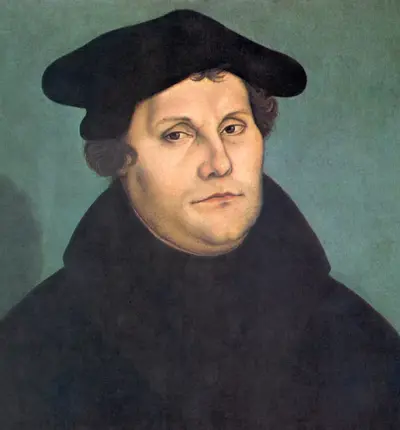
Martin Luther, O.S.A. was a German professor of theology, priest, author, composer, Augustinian monk, and a seminal figure in the Reformation. Luther was ordained to the priesthood in 1507. He came to reject several teachings and practices of the Roman Catholic Church; in particular, he disputed the view on indulgences. Luther proposed an academic discussion of the practice and efficacy of indulgences in his Ninety-five Theses of 1517. His refusal to renounce all of his writings at the demand of Pope Leo X in 1520 and the Holy Roman Emperor Charles V at the Diet of Worms in 1521 resulted in his excommunication by the pope and condemnation as an outlaw by the Holy Roman Emperor.
