David Dudley Field II Quotes
The greatest achievement ever made in the cause of human progress is the total and final separation of church and state. If we had nothing else to boast of, we could lay claim with justice that first among the nations we of this country made it an article of organic law that the relations between man and his Maker were a private concern, into which other men have no right to intrude.
David Dudley Field, 1805-94, New York State Jurist, Jurisprudence, 1893
Sourced by: Eigen's Political and Historical Quotations

The same phrase was used by Count de Montalembert at a Catholic conference in Malines, August 20, 1863, and is sometimes attributed to him.


This is a critical quotation on the government establishment of religion issue. There are a few people who have argued over the years that the Founding Fathers and their culture was religious and where they were careful to avoid favoring one religion over another, they did NOT intend to put atheism on the same equal plane as religion as far as government action is concerned. However, some of the Founding Fathers were atheists, and some others like John Adams were deists—they believed in a God but not in the Trinity or in Judaism or any organized religion. So this quotation makes it clear that the First Amendment does NOT favor religion over non religion or secularism. Atheism must be on an equal footing but not on a higher plane.


Carter was personally one of the most religious of our Presidents.

This is a remarkable quotation in that it shows us that there was virtual unanimity about the separation of church and state including the various clergy who were in support of it. Yet in the 21st century there was considerable controversy among some fundamentalist groups who sought more religious influence and/or control of government policy and criminal laws.


This publication was one of the best selling in the entire history of America. Rarely has a single publication been read by as high a proportion of a population. Those who support the maintenance of a strict separation of Church and State in America often point to this quotation and the popularity of Common Sense as evidence that not only were the founding fathers in favor of strict separation but so was the general Colonial American public.


This quotation is one of the first to make the critical observation that the only time that tolerance of a religion is necessary is when there is an established church and others that deviate from it. If there is no established church, as the Founding Fathers envisioned, there is no preeminent church to do the tolerating. All are equal. In practice, Protestant churches were proportionately dominant in early America and up through the 20th century. So most of the issue of tolerance problems in America were cultural. And there is still a minority of Christians who believe that America should be a Christian country and other religions should be “tolerated.” However, Clinton and most of the founders did not want to see even general Christianity established as the national religion even they it was the majority religion.


Responding to criticisms by Rev. Jerry Falwell about America's moral decline: See also, Mark Russell

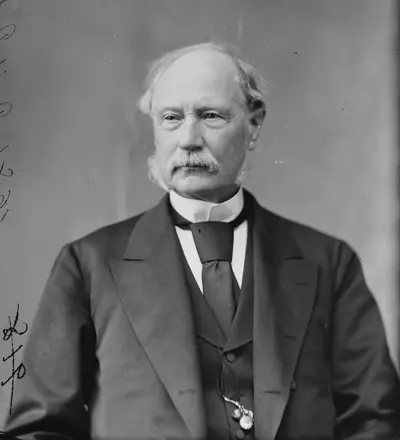
David Dudley Field II was an American lawyer and law reformer who made major contributions to the development of American civil procedure. His greatest accomplishment was engineering the move away from common law pleading towards code pleading, which culminated in the enactment of the Field Code in 1850 by the state of New York.
