Buffalo Bill Quotes
The first scalp for Custer.
Cody had fought a one-against-one battle against Chief Yellow Hair whom he killed and scalped. He then rode back to his troops shouting the quotation. Later, he displayed the scalp publicly.
William Frederick Cody, 1846-1917, [Buffalo Bill], Showman & Chief Scout of the U. S. Army
Sourced by: Eigen's Political and Historical Quotations


Hull surrendered a few days later.

He and the 7th Cavalry were themselves whipped and killed shortly thereafter.

This was the beginning of the Jeffersonian effort culminating in the Corps of Discovery and the Lewis & Clark Expedition. Presidential, confidential memoranda to the Congress were more common then than now when they have become a rarity.


Shortly thereafter the woe was transferred to Custer as he was wiped out at the Battle of the Little Bighorn.


Over the years Sherman’s advocacy of Indian extermination went beyond the Sioux to all Indians.

The Indian allies of the French scalped some American colonists which for some whites was akin to the modern reaction to terrorist atrocities. The British and Americans then justified the scalping of their Indian allies as simple retaliation. While Indians had scalped before the whites ever came, the whites accelerated the practice. There was an economic element to scalping. The French “paid” their Indian allies in arms, blankets, trinkets and alcohol by the scalp as it was a crude way of “performance measurement.” Not to be outdone, the English adopted the same custom with the French allied Indians as targets. In North Carolina, for example, the “volunteer” rangers were paid the enormous rate of 10 pounds a scalp.

The Iroquois were generally recognized, even by the other tribes and nations, and the most advanced and most powerful of the Native Americans. Their example was critical in shaping the policies and behavior of all the Indians. At the time “Western” Indians referred to those in Pennsylvania, Ohio, Kentucky, Illinois and those West of the Eastern seaboard. West Coast and Plains Indians were not known generally known to the colonists and those nations had no knowledge of the Iroquois. Johnson himself married an Iroquois woman.

Prior to whites settling in America, various Indian tribes had a long history of fierce fighting for control of Kentucky. The Transylvania Land company negotiated for the “rights” to Kentucky. Dragging Canoe, who opposed the treaty, argued that the land had a bad history and would be very difficult to settle. Poet Theodore O’Hara described Kentuckians as “Sons of the Dark and Bloody Ground” in his poem, The Bivouac of the Dead.

In 1877 Gen. O. O. Howard and 600 men fought Chief Joseph and his Nez Perce warriors near Kamiah, Idaho. Outnumbered and outflanked, Chief Joseph headed his band toward the Canadian border, but before they reached it they were captured. Chief Joseph's surrender speech was recorded by General Howard's adjutant: Thunder Rolling Down the Mountain

Self Given Title. The governor distinguished between friendly Indians from others to the consternation of Bacon and his followers.
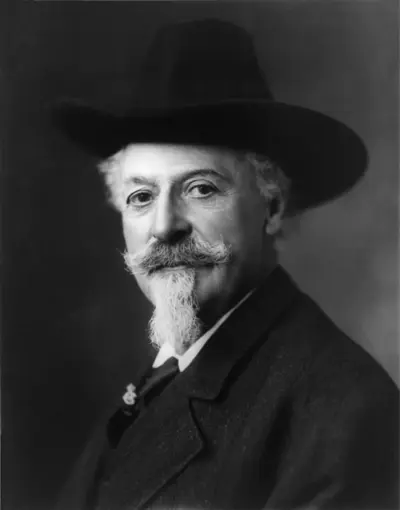
William Frederick "Buffalo Bill" Cody was an American soldier, bison hunter, and showman. He was born in Le Claire, Iowa Territory (now the U.S. state of Iowa), but he lived for several years in his father's hometown in modern-day Mississauga, Ontario, Canada, before the family returned to the Midwest and settled in the Kansas Territory.
