Jon Meacham Quotes
[Andrew] Jackson could be woefully wrong, He was an unapologetic defender of slavery and the main architect of Native American Removal. Even before he was President his many Indian wars destroyed much of tribal culture in a headlong grab for land.
His Indian Removal Policy forced Native American to leave their lands which were theirs by treaties signed by the United States and marched to the poorest land in Oklahoma where they were "resettled". This is often referred to as the "Trail of Tears". What made his actions evern wors was the fact that The Supreme Court had already ruled that such land belinged to the Cherokee Indian Tribe and the government of the United States may not force them from it. Jackson was the only President in Amrican History to defy a Supreme Court order.
Meacham, Jon. American Lion: Andrew Jackson in the White House. Random House, 2008, p. xxi.

Jackson ignored the decision of the Supreme Court and forced at bayonet point the Indians in the South East to leave their land and relocate to Oklahoma in what has been known as “the trail of tears”.


“Cleaned out” meant destroyed. He had been a strong advocate of peace with whites. See {610679} .

President Jackson was the most extreme President in terms of abuse of Native American Rights. His racist views and policies were a large reason for the continuing problems that Indians have had gaining fair treatment and equality. Jackson was the only American President who ever refused to obey a Supreme Court decision when he removed the Cherokee Indians from their lands, despite the fact that the Supreme Court had ruled that such a removal was illegal. See {623405} for other Jackson views on Indian policy.

First Published American Indian Author. His last public speech. He was referring to a horrible massacre of Christian Indians and the polarizing effect that such conflicts had. Whosoever publicly castigated a massacre of whites or Indians would be met by accusations of condoning the massacres of the other side and ignoring the inevitable and natural seeking of retaliation for future protection and revenge.
The petition was ignored and the Cherokee were “removed” on the infamous Trail of Tears.

The officer who testified at the inquiry of the Sand Creek Massacre, Lieutenant Joseph Cramer, was murdered thereafter in Denver by a supporter of Chivington’s. Sand Creek’s Indians were mutilated even after death with breasts and scrotums cut off as souvenir tobacco pouches. Ironically, President Lincoln had med with some of the killed Cheyenne leaders at the White House the year before and his quotation presages those whites who would break treaty.

Pickering referred to Jefferson as the “Negro President” because he believed his presidential power rested on the shoulders of slavery.


This was a terrible Supreme Court decision which placed slave owning whites against whites who opposed slavery in conflict over runaway slaves and free blacks throughout the country. It held that Blacks—even free Blacks had no Constitutional rights and was one of the major causes of the Civil War. See {623426}.
The century to which he was referring was the 19th century---1800-1899.


Samuel Langhorne Clemens, 1835-1910. Twain was one of the few whites who realized that success in assimilating American Indians would destroy their culture and identity. Even today, whites and Indians alike constantly debate the desirability of assimilation policies and supporting independent reservations.
The Iroquois were among the most sophisticated of the North American Indian Tribes. They also were highly assimilated into the American society. In the next decades, they would switch their political position when New York State provided better legal guarantees for Iroquois land than the Federal Government. By the end of the 20th Century, led by the Iroquois, the Indian residents of New York State had the same level of earnings as the white man—and that was with NO INDIAN GAMING.

This idea has been rejected by American Blacks from before the Civil War. There were many Black families that have been in America longer than Rockwell who always had the choice to go back to where they cam from if they were unhappy with America but they never did.

See {633119} for the basic provision of the Dawes Act.


What is interesting is that when he cites the dreadful facts about American slavery, he never points out that the American slave traders rarely raided the villages and captured the slaves themselves. Most often this was done my Khamenei’s Muslim brethren slave traders who dominated the slave trade in Africa. Nor does he point out what after realizing the evil that Americans perpetrated with slavery, we ended it in the 1860s. Saudi Arabia, the central nation of Islam, did not make slavery illegal until 100 years later, and even today, there are many Saudi’s who get caught practicing slavery with household servants and forms of indentured servitude. And while Christians and the Bible tolerated slavery, the Koran and the Prophet never once condemn the practice of slavery. Democracy at any point in time is not always morally right, but it is a process by which under pressure from the people it improves over time because the people can change it and do.

Gold had been discovered in the Black Hills lands that were sacred to the Lakota Sioux and were reserved for exclusive use of the Indians by the Fort Laramie Treaty. Greedy whites, ignoring the treaty provisions not only entered the Black Hills to pan and mine for the gold, but killed many Indians they ran across Sherman was angry and wrote to his old friend President Grant. Grant, now a political, had to contend with public opinion that thought it absurd that gold should not be mined because a few Indians regarded the land as sacred. Meanwhile Grant was working with a few others to portray minor clashes between whites and Indians in the Black Hills as violent and dangerous Indians breaking the treaty.

The president was commenting on a Donald Trump campaign statement that African American were in the worst shape in history when the reality was just the opposite
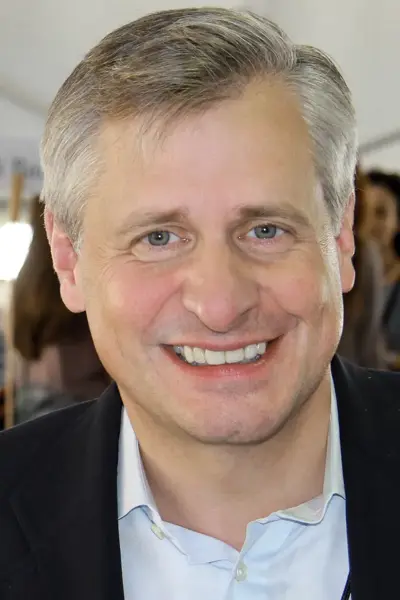
Jon Ellis Meacham is an American writer, reviewer, historian and presidential biographer. A former Executive Editor and Executive Vice President at Random House, he is a contributing writer to The New York Times Book Review, a contributing editor to Time magazine, and a former Editor-in-Chief of Newsweek. He is the author of several books. He won the 2009 Pulitzer Prize for Biography or Autobiography for American Lion: Andrew Jackson in the White House. He holds the Carolyn T. and Robert M. Rogers Endowed Chair in American Presidency at Vanderbilt University.
