Henry Howard Quotes
The measure was also allowable on principle, for that it was perfectly justifiable to use all the means that God and nature had put into their hands
This argument, condemned by many Englishmen, was essentially, it is moral to do whatever you God made you able to do a principle that was refuted in Christianity, Judiasm and most other religions. See {620562} for Clinton’s history of white encouragement of Indian scalping.
Henry Howard, 1739–1779, 12th Earl of Suffolk, British Secretary of State for the North America, Speech to Parliament Defending the British Practice in the American Revolution of paying British Indian Allies to scalp American Colonial revolutionists, Quoted by DeWitt Clinton, Speech to the New York Historical Society, December 6, 1811
Sourced by: Eigen's Political and Historical Quotations

Clinton was a founder of the society and considered an excellent historian. When giving this presentation he had documentation and academic references for each of the statements.

The Indian allies of the French scalped some American colonists which for some whites was akin to the modern reaction to terrorist atrocities. The British and Americans then justified the scalping of their Indian allies as simple retaliation. While Indians had scalped before the whites ever came, the whites accelerated the practice. There was an economic element to scalping. The French “paid” their Indian allies in arms, blankets, trinkets and alcohol by the scalp as it was a crude way of “performance measurement.” Not to be outdone, the English adopted the same custom with the French allied Indians as targets. In North Carolina, for example, the “volunteer” rangers were paid the enormous rate of 10 pounds a scalp.

Clark’s men had English Colonel Hamilton under siege by making him think there were many more Americans in Clarks army than the real 180 or so. He tried to get Hamilton to surrender by threatening if they had to take the fort they would treat Hamilton and the British as murderers—Hamilton had paid hostile Indians for American scalps. At that point a party of Clark’s men arrived with 4 or 5 Indian prisoners who had been captured raiding
civilian farms. After the Indians were executed, Hamilton agreed to surrender.


Lev Davidovich Bronstein

There is disagreement amongst historians as to whether or not the atrocities attributed to the retreating British troops were actually true. There are two other possibilities. First, this report was made only a week after the battle itself and less than that since the alleged atrocities would take place as the British retreated. There were certainly all kinds of rumors with information passed from person to person with no modern means of documentation. The Provisional Congress may have sincerely thought that all the events occurred but they may have been the result of inadvertent exaggeration. Then there is the possibility that in order to fire up the Americans to join the war, some or all of the atrocity reports were deliberately fabricated. It would only take two or three delegates to agree on such a strategy and they could “confirm” each other’s accounts of the happenings. Of course it might all be true. However, as the British retreated to Boston where they had reinforcements, they did not have a lot of time for malicious atrocities. All along the route, Minutemen, local farmers and townspeople continued the attack against the British. By the time the British soldiers reached Boston, 73 British solders were dead and 174 more were wounded. In war truth does not have the respect that it usually does. See {626632}.

This speech was officially prepared and read to the six Indian tribes of the Iroquois Nation. The purpose was to persuade the Iroquois Indians to stay neutral (see {583726}) in the coming conflict with England. The Iroquois had traditionally traded peaceably with the colonists and on many occasions the colonists and the Iroquois had fought against the French and other Indians. Unfortunately, a Mohawk chief, Joseph Brant, had traveled to England and been educated there. He, following the conventional wisdom of the day persuaded most of the Iroquois tribes to join the obvious winner—England—and fight on their side. Only the Oneida tribe resisted Brant’s advice, and joined the revolutionists. The result was a civil, fratricidal war of not only white, but also the Iroquois Indians who had been at peace with each other since any could remember. When the colonists won, the Oneida were warmly embraced and participated in New York and other colonial life and activities. The relationship was so good that a little over 200 years later the average earnings of the Indian in New York State exceeded that of the average white man. The other 5 Iroquois tribes however were attacked and driven out of their traditional territories and they fled with Joseph Brant to English Canada where they have not yet fully recovered their important place in the society.

Many Americans and Europeans fought on the side of the Republicans against the Fascists.

This problem exists even in democracies where administrations often seek to expand their power and use or create a crisis to justify the expansion of their powers.

In 1856 Kansas was at war over slavery. Kansas was to enter the Union with the resident men voting to determine whether it would be a slavery state or a free state. At first pro-slavery forces sent men into Kansas to increase the pre-slavery vote. The abolitionist anti-slavery forces outside of Kansas did the same, and had more money to finance anti-slavery settlers. Soon the pro-slavery forces, realizing that they would be outnumbered turned to violence and began to intimidate abolitionist settlers to return from whence they came. Soon abolitionists were killed and the anti-slavery men retaliated. Soon real war broke out but terrorism was the modality on most attacks as the purpose of the pro-slavery men was to frighten the abolitionists—many of whom were religious pacifists—into leaving the state. Brown and some other abolitionists retaliated with terror of their own, but Brown was rabid. He and his sons, attacked 5 pro-slavery fighters at Pottawatomie Creek, but Brown personally hacked off their limbs with a broadsword and left the bodies to intimidate and terrorize many of the pro slavery people. Brown was such a fanatic that he, in this infamous quote, claimed that his killing and butchery was “justified under the circumstances.” The phrase “Bleeding Kansas” came from the violence and terrorism in this period.


Calley was the officer who gave orders to kill men, women and children of My Lai, a Vietnam village which Army intelligence felt had been sympathetic and given help and assistance to the Viet Cong. Calley was convicted by Court Marshall, but was released after serving a very light sentence. No one above Cally was held in any way responsible.
This has been true in just about every conflict. In WWII however, there were a highly disproportionate ration of atrocities with those of the axis forces dwarfing those of the U. S. and its allies. Further, after the war, those allied atrocities that did take place were published. In addition, one basic difference is in the policies of the fighting forces and their governments as opposed to individual actions by soldiers. In WWII, the allied atrocities were of the latter type, but the axis atrocities involved both.

There was a significant opposition in England who opposed the war against the rebellious colonies. Fox was one of the most outspoken who thought that England would not win.

He was the Secretary of State in the War Office at the time. The Royal Air Force had suggested an experiment---gassing “recalcitrant Arabs” from the air. This predated Sadaam Hussein's gassing of Hussein's gassing of his own people by over 70 years.
The Philippine-American War was terribly brutal. In response to insurgent atrocities against American soldiers, some of the Americans also adopted brutal tactics including torture and mutilation. Washington had heard stories of this improper behavior in the part of some American troops and instructed the senior officers to investigate and discipline the men if the reports were true. Unfortunately some of the senior officers covered up the illegal and criminal behavior of some Americans. This quotation was taken from a New York Times report on a representative of the Red Cross who went to the Philippines at the invitation of the insurgents. He generally found serious atrocities by some of the soldiers on both sides but by no means all of the combatants. General Otis, the U. S. Commander tried to keep Blake out, and had him detained away from the battle areas for some weeks where he was “educated” about the enemy atrocities. Finally Blake got to the field and reached the insurgent commander who had invited him. His report generally praised the American troops, but spared no details when there were guilty of atrocities.
Some of the Indian tribes who were allied with the French, raided the farms and settlements of upper New York State, committing many atrocities. Amhurst allowed Rogers Rangers to carry the war to the enemy; the Rangers traveled to St. Francis in Canada and attacked the Indian tribe in their home village, killing all the men, and despite Amhurst’s orders, some of the women. The other women and children were released. This was the first successful American commando raid. Rogers had almost no casualties in the raid, but lost many men to starvation and disease on the long trek home.


Under the Jay Peace Treaty for the American Revolution, the Iroquois were recognized as an Independent Nation. (5 of the tribes fought for the British and 1 for the Colonists which is why the Iroquois were one of the subjects of the peace treaty. In 1942. the Iroquois wanted to maintain their own sovereignty and so they made their own declaration of war in WWII. Then Iroquois men then enlisted in the American Armed Forces. The Iroquois had made their own separate Declaration of War in WWI as well.

This admonition of his applied not only to initiating war, but to increasing unemployment for a worthy purpose like controlling inflation. He sought solutions where pain was borne by tall if necessary, but not to particular subgroups (identifiable or not) to the degree that they would suffer badly. In general, we should not sacrifice some for the good of the whole without their volunteering, as in a volunteer army.


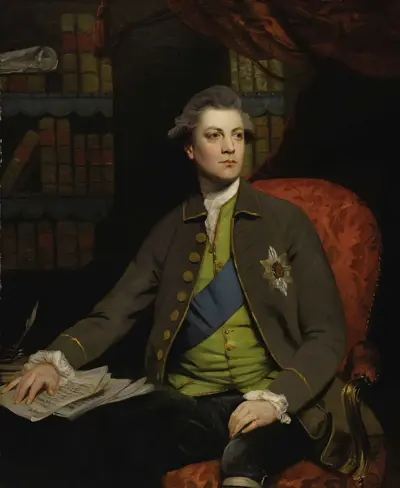
- Born: May 16, 1739
- Died: March 7, 1779
- Nationality:
- Profession:
Henry Howard, 12th Earl of Suffolk, 5th Earl of Berkshire, KG, PC was a British politician, styled Viscount Andover from 1756 to 1757.
