Charles Francis Adams II Quotes
The dynasty of Cotton is based on the monopoly of the cotton-culture in the Cotton States of the Union; its whole policy is directed to the two ends of making the most of and retaining that monopoly; and economically it reduces everything to subserviency to the question of cotton-supply; — thus Cotton is King. The result necessarily is, that the Cotton States have turned all their energies to that one branch of industry. All other branches they abandon or allow to languish. They have no commerce of their own, few manufactories, fewer arts; and in their abandonment of self in their devotion to their King, they do not even raise their own hay or corn, dig their own coal, or fell their own timber;.
The South’s economy was based on Cotton and the way they raised cotton depended on slaves. From the point of view of the South, giving up slavery meant economic ruin. Their great mistake many think, was to not have used the time from the American Revolution to the 1860s to diversify their economy and do what the North and the Midwest had done and industrialize. Then they could have ended slavery without the devastating economic consequence. But they did not, and the result was history for the world and disaster for the South.
Charles Francis Adams II, 1835–1915, Historian, Civil War Colonel, Executive & Writer, President of the American Historical Association, Chairman of the Massachusetts Park Commission, President of the Union Pacific Railroad, Grandson of President John Quincy Adams, “The Reign of King Cotton”, The Atlantic Monthly, April 1861
Sourced by: Eigen's Political and Historical Quotations

Arguing that Slavery inhibited a society from development ...

Historicaly this quotation gives us an idea of how backward the Arab countries were. And at that time, Egypt was the biggest and most advanced in the Middle East.

The issue of free trade verses protectionism has been with us throughout American history with national sentiments going one way and then later the other, only to come back and the cycle has gone on. Floyd was very modern in his economic views, so much so that he, even as a Southern politician, opposed slavery on the grounds that it was economically inefficient and the South would never develop industrially if it had no incentive, as existed in the North and England, to reduce the amount of labor required for economic opportunity. He was right on that point as well.


The South had been economically corrupted by slavery as there was very little industry ever developed in the South because there were few investments a man with capital might make that returned as much as a Plantation and slaves. Grady tried to raise the consciousness of Southernors with this brilliant piece of oratory. Despite his efforts, industrial progress in the South was very slow to develop. It would take two more generations to shake off the slavery mentality in the South and begin to develop industry.


Most defenders of the Capitalist system that produces large inequities argue that interfering in the free market wouldl be worse. However this thesis argues that the inequality is actually good for the people including those at the low end of the ladder.

After traveling thorugh Virginia which was then the wealthiest and most developed of the slave states, he wrote ...

The Interstate Commerce clause of the Constitution ensured that this would happen. It was so successful that the EEC and other groups of countries tried to emulate it by creating legal common markets.

At the time, the Chamber of Commerce represented the small and medium business which were being decimated by the large businesses and their monopolies. A century later, the Chamber became a creature of the large business and their money and by 2010, the Chamber had virtually become the representative of the large businesses outside of the high technology field and had become a campaigning arm of the Republican Party, In 1880 however, they called public attention to the abuses of the large corporate monopolies.

She was then the European Commissioner for Competition

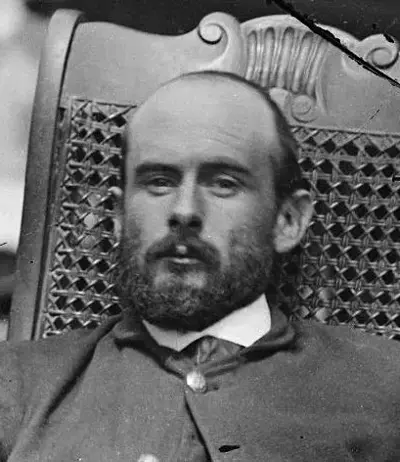
Charles Francis Adams Jr. was an American author and historian. He was a member of the prominent Adams family, and son of Charles Francis Adams Sr. He served as a colonel in the Union Army during the American Civil War. After the war, he was a railroad regulator and executive, an author of historical works, and a member of the Massachusetts Park Commission.
