Henry W. Grady Quotes
I attended a funeral once in Pickens county in my State. . . . This funeral was peculiarly sad. It was a poor “one gallus” fellow, whose breeches struck him under the armpits and hit him at the other end about the knee—he didn’t believe in decollete clothes. They buried him in the midst of a marble quarry: they cut through solid marble to make his grave; and yet a little tombstone they put above him was from Vermont. They buried him in the heart of a pine forest, and yet the pine coffin was imported from Cincinnati. They buried him within touch of an iron mine, and yet the nails in his coffin and the iron in the shovel that dug his grave were imported from Pittsburg. They buried him by the side of the best sheep-grazing country on the earth, and yet the wool in the coffin bands and the coffin bands themselves were brought from the North. The South didn’t furnish a thing on earth for that funeral but the corpse and the hole in the ground. There they put him away and the clods rattled down on his coffin, and they buried him in a New York coat and a Boston pair of shoes and a pair of breeches from Chicago and a shirt from Cincinnati, leaving him nothing to carry into the next world with him to remind him of the country in which he lived, and for which he fought for four years, but the chill of blood in his veins and the marrow in his bones.
The South had been economically corrupted by slavery as there was very little industry ever developed in the South because there were few investments a man with capital might make that returned as much as a Plantation and slaves. Grady tried to raise the consciousness of Southernors with this brilliant piece of oratory. Despite his efforts, industrial progress in the South was very slow to develop. It would take two more generations to shake off the slavery mentality in the South and begin to develop industry.
Henry W. Grady, speech to the Bay State Club of Boston, 1889.
Sourced by: Eigen's Political and Historical Quotations

The issue of free trade verses protectionism has been with us throughout American history with national sentiments going one way and then later the other, only to come back and the cycle has gone on. Floyd was very modern in his economic views, so much so that he, even as a Southern politician, opposed slavery on the grounds that it was economically inefficient and the South would never develop industrially if it had no incentive, as existed in the North and England, to reduce the amount of labor required for economic opportunity. He was right on that point as well.

The South’s economy was based on Cotton and the way they raised cotton depended on slaves. From the point of view of the South, giving up slavery meant economic ruin. Their great mistake many think, was to not have used the time from the American Revolution to the 1860s to diversify their economy and do what the North and the Midwest had done and industrialize. Then they could have ended slavery without the devastating economic consequence. But they did not, and the result was history for the world and disaster for the South.

Jefferson’s view of manufacturing however was small scale, craftsmen-oriented workshops, and not the large industrial efforts that were also so important in American growth and development. In early America, imports from England and Europe where the primary modes of obtaining the “comforts of life.”


This was an expression of concern from the merchants of Rhode Island to England regarding curtailing aspects of the slave trade. Ironically, this Remonstrance is one of the first documents objecting to the management of America’s affairs by England when America had no representation. Therefore it played a part in the process which culminated in the American Revolution and freedom from England. And yet the subject was not freedom at all but just the opposite—the prerogative of maintaining the slave trade. Note that the appeal to the Board of Trade was not couched in ethical or political argument but as a mercantile argument—Rhode Islander’s would import less British goods.

Arguing that Slavery inhibited a society from development ...

This same argument was used before and since to justify protecting domestic manufacturing from foreign competition until it can mature sufficiently to compete in a global economy. One difficulty occurs if protective tariffs are imposed for this reason. The manufacturers protected never seem to reach the point where they can compete without the subsidy.


He certainly was right, but no one has found it. The global warming debate of the early 21st century is the extreme example. Yet Glotz told everyone what was coming 15 years earlier.
Earlier, Jefferson was opposed to manufacturing in America as factories were a social blight in Europe which he wanted to keep out of the United States. He felt that we could import whatever we needed from Europe and not have the evils of industrialization. However, with the War of 1812, the Barbary Pirates and his mellowing when no longer President, and his willingness to change his positions as he learned more, he issued this letter. See another the following year: {615634}. His was considered such an important change of position—today we would accuse him of a flip flop— that other journals and periodicals reprinted the letter and commented upon his change. Despite his changed position, most Americans believe that Jefferson was opposed to manufacturing and industrialization for his entire life—not just the first part.


His views are a mix of modernism and fundamentalism. He favors democracy and elections but also favored the Taliban destroying the great ancient Buddha statues when he was called an idol worshipper for urging the preservation of art. His ignorance of modern technology Is illustrated by his complaint that the Arab nations do not even “produce a single nail” for modern cars. The reality is that there are no more nails in modern cars.

Historicaly this quotation gives us an idea of how backward the Arab countries were. And at that time, Egypt was the biggest and most advanced in the Middle East.


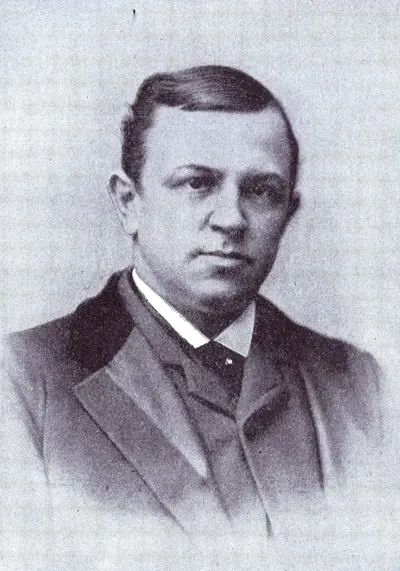
Henry Woodfin Grady was an American journalist and orator who helped reintegrate the states of the Confederacy into the Union after the American Civil War. Grady encouraged the industrialization of the South. He was praised by contemporaries and by authors Shavin and Galphin as a civic promoter, political strategist and captivating speaker, and by Atlanta journalist Frederick Allen as a visionary. However, in current times, Grady's arguments for the need for white supremacy in the post-Civil War South have resulted in his legacy being seen nowadays as anywhere from positive, to both positive and negative, to racist and therefore negative. Grady's name has been removed from several schools including Atlanta's former Grady High School. Grady was the father-in-law of Federal Reserve Chairman Eugene Robert Black and grandfather of banker and World Bank President Eugene R. Black Sr.
