John Stuart Mill Quotes
... a better government: more complete security of property; moderate taxes; a more permanent ... tenure of land ... the introduction of foreign arts ... and the introduction of foreign capital, which renders the increase of production no longer exclusively on the thrift or providence of the inhabitants themselves.
John Stuart Mill, 1806-1873, Member of Parliament, British Political Economist, Requirements for economic growth, Quoted in William Easterly, The White Man's Burden, 2006
Sourced by: Eigen's Political and Historical Quotations


At the time very few industrialists appreciated the value of particular workers and tended to think of them as interchangeable parts.


Many corporate executives were claiming that they were not investing in growth and jobs because they were uncertain about the future tax rates or regulatory environment with which they would be coping. But with elections coming up, there has never been such certainty, and much of the best growth in American business was in the Clinton administration where these policies were under constant debate. Immelt identified the real problem: Demand for products and services was very weak.

During the revolution against apartheid, a number of communist organizations allied themselves with the ANC against the White minority regime. A few of the communist leaders rose and became officials of the ANC. The vast majority of the ANC supported private enterprise with the kind of socialist aspects that were then typical of the Scandinavian countries, Germany and even France. Mandela, before the successful ousting of the Apartheid held a number of communist ideas and principles as the “capitalists” were making money from the apartheid system and there would support the status quo, However, he had a change of heart and mind regarding private enterprise after the successful effort to end white minority rule. He was good to his word, and even after he retired, the ANC and the government maintained pro private enterprise policies.


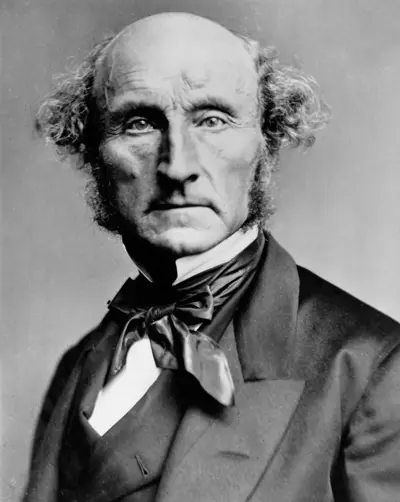
John Stuart Mill, usually cited as J. S. Mill, was an English philosopher, political economist, Member of Parliament, and civil servant. One of the most influential thinkers in the history of classical liberalism, he contributed widely to social theory, political theory, and political economy. Dubbed "the most influential English-speaking philosopher of the nineteenth century", he conceived of liberty as justifying the freedom of the individual in opposition to unlimited state and social control.
