Catherine Helen Spence Quotes
I had learned what wealth was, and a great deal about production and exchange for myself in the early history of South Australia - of the value of machinery, of roads and bridges, and of ports for transport and export.
Spence, Catherine Helen. An Autobiography. W. K. Thomas & Co., 1910.


1st Baron Verulam. This quotation appeared on the door of the transportation building of the World's Colombian Exposition in Chicago, 1893

This section of the message was all about the Erie Canal that was under construction. Note that unlike today, where interest in public works and development is so localized, Clinton was extolling the virtue of developing the economy of the region and the nation. The money was all New York State money. The Federal Government would not fund the Erie Canal as they did not believe it was technically feasible to construct. See {624484} . Patriotism had a different meaning then.


At the time very few industrialists appreciated the value of particular workers and tended to think of them as interchangeable parts.

This was one of the early suggestions for providing jobs for the unemployed to work at developing the national infrastructure. In this case if highways and the river could be improved, transportation would allow goods to be reach more of the country cheaper. The CCC and the Job Corps of America would use a similar reasoning for public employment.

This is one of the greatest economic predictions ever made.


Although Madison vetoed the Federal bill to improve the national infrastructure, he was very much for the improvements and he said so in this veto message. He, however, did not see the Constitutional authority for the Federal government to appropriate moneys to be spent in the States for infrastructure improvement. He was for a Constitutional Amendment to do so or to make the improvements using State money as New York did building the Erie Canal. Alexander Hamilton, and many of the Congressmen who voted for the bill disagreed (many of whom were also in the Constitutional Convention) and did not see the Constitutional limitation that Madison did. See Hamilton’s Quote 644278. He was particularly concerned that small and less affluent states could not possibly have the skill to design these or the finances to build them. Later President’s and Congresses sided with Hamilton. It would be hard to envision America today of Madison’s view had prevailed.

Arguing that Slavery inhibited a society from development ...


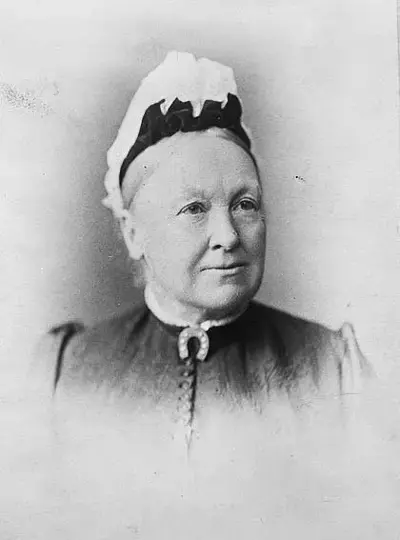
Catherine Helen Spence was a Scottish-born Australian author, teacher, journalist, politician, leading suffragist, and Georgist. Spence was also a minister of religion and social worker, and supporter of electoral proportional representation. In 1897 she became Australia's first female political candidate after standing (unsuccessfully) for the Federal Convention held in Adelaide. Called the "Greatest Australian Woman" by Miles Franklin and by the age of 80 dubbed the "Grand Old Woman of Australia", Spence was commemorated on the Australian five-dollar note issued for the Centenary of Federation of Australia.
