Norman Borlaug Quotes
Africa needs roads. Roads bring know-how and fertilizer to farmers and ideas and business for commerce.
Bailey, Ronald. "Billions Served: Norman Borlaug Interviewed by Ronald Bailey." Reason, vol. 31, no. 11, Apr. 2000, pp. 30-37.

Arguing that Slavery inhibited a society from development ...


1st Baron Verulam. This quotation appeared on the door of the transportation building of the World's Colombian Exposition in Chicago, 1893

Building of roads and highways was not then an accepted national priority.

This was one of the early suggestions for providing jobs for the unemployed to work at developing the national infrastructure. In this case if highways and the river could be improved, transportation would allow goods to be reach more of the country cheaper. The CCC and the Job Corps of America would use a similar reasoning for public employment.


Although Madison vetoed the Federal bill to improve the national infrastructure, he was very much for the improvements and he said so in this veto message. He, however, did not see the Constitutional authority for the Federal government to appropriate moneys to be spent in the States for infrastructure improvement. He was for a Constitutional Amendment to do so or to make the improvements using State money as New York did building the Erie Canal. Alexander Hamilton, and many of the Congressmen who voted for the bill disagreed (many of whom were also in the Constitutional Convention) and did not see the Constitutional limitation that Madison did. See Hamilton’s Quote 644278. He was particularly concerned that small and less affluent states could not possibly have the skill to design these or the finances to build them. Later President’s and Congresses sided with Hamilton. It would be hard to envision America today of Madison’s view had prevailed.


In order to develop the country she invited immigrants to come to Russia and many did at the same time that England was encouraging immigrants to develop the lands and resources of America

MacNab was also a director of the Great Western Railway.


At the time, roads were built by the states. This was one of the first instances urging that the Federal Government take some responsibility for roads. This would culminate when President Eisenhower proposed and created the National Highway System and as Madison predicted, it would have a massive economic benefit for the nation.
Over 100 years later a group of Islamic Modernists and Scientists came to a similar conclusion.

This section of the message was all about the Erie Canal that was under construction. Note that unlike today, where interest in public works and development is so localized, Clinton was extolling the virtue of developing the economy of the region and the nation. The money was all New York State money. The Federal Government would not fund the Erie Canal as they did not believe it was technically feasible to construct. See {624484} . Patriotism had a different meaning then.
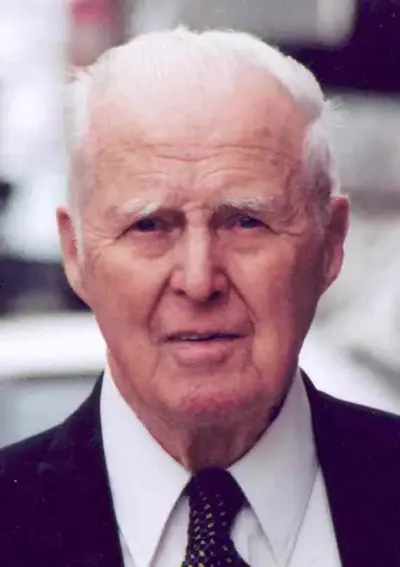
Norman Ernest Borlaug was an American agronomist who led initiatives worldwide that contributed to the extensive increases in agricultural production termed the Green Revolution. Borlaug was awarded multiple honors for his work, including the Nobel Peace Prize, the Presidential Medal of Freedom and the Congressional Gold Medal.
