Margaret Thatcher Quotes
You and I come by road or rail, but economists travel on infrastructure.
Thatcher, Margaret. The Downing Street Years. HarperCollins, 1993.

MacNab was also a director of the Great Western Railway.


Although Madison vetoed the Federal bill to improve the national infrastructure, he was very much for the improvements and he said so in this veto message. He, however, did not see the Constitutional authority for the Federal government to appropriate moneys to be spent in the States for infrastructure improvement. He was for a Constitutional Amendment to do so or to make the improvements using State money as New York did building the Erie Canal. Alexander Hamilton, and many of the Congressmen who voted for the bill disagreed (many of whom were also in the Constitutional Convention) and did not see the Constitutional limitation that Madison did. See Hamilton’s Quote 644278. He was particularly concerned that small and less affluent states could not possibly have the skill to design these or the finances to build them. Later President’s and Congresses sided with Hamilton. It would be hard to envision America today of Madison’s view had prevailed.


Building of roads and highways was not then an accepted national priority.


This was one of the early suggestions for providing jobs for the unemployed to work at developing the national infrastructure. In this case if highways and the river could be improved, transportation would allow goods to be reach more of the country cheaper. The CCC and the Job Corps of America would use a similar reasoning for public employment.
At the time, roads were built by the states. This was one of the first instances urging that the Federal Government take some responsibility for roads. This would culminate when President Eisenhower proposed and created the National Highway System and as Madison predicted, it would have a massive economic benefit for the nation.


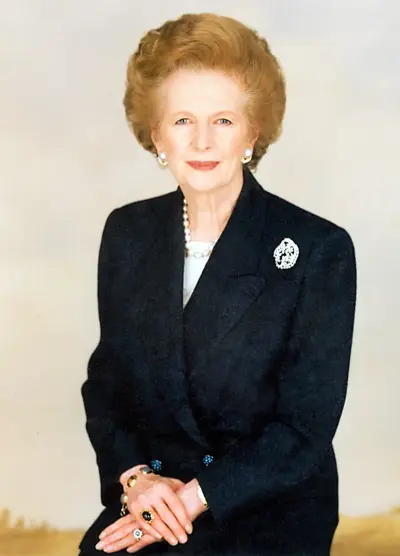
Margaret Hilda Thatcher, Baroness Thatcher, LG, OM, DStJ, PC, FRS, HonFRSC was a British stateswoman who served as Prime Minister of the United Kingdom from 1979 to 1990 and Leader of the Conservative Party from 1975 to 1990. She was the longest-serving British prime minister of the 20th century and the first woman to hold that office. A Soviet journalist dubbed her the "Iron Lady", a nickname that became associated with her uncompromising politics and leadership style. As prime minister, she implemented policies that became known as Thatcherism.
