Santiago Calatrava Quotes
A railway station is something that can generate a city.
Calatrava, Santiago. Santiago Calatrava: Conversations with Students. Princeton Architectural Press, 2002.


MacNab was also a director of the Great Western Railway.

Building of roads and highways was not then an accepted national priority.


FDR had envisioned a national highway system. He had taken a map of the United States and drew three horizontal lines across the country and another three vertical lines running North to South. These he envisioned as a national highway system. The Second World War intervened with all men and material devoted to the war effort, highway ideas were all on the back burner. After the war President Dwight Eisenhower, in one of the great presidential achievements of American history, initiated the Federal National Highway System. The main difference was a reversal of the classic party positions. Democrat Roosevelt had planned to have the users pay for much or part of the construction and maintenance, while Republican Eisenhower accepted the entire burden on the general taxpayers and tolls and usage fees were banned on Federal Highways.

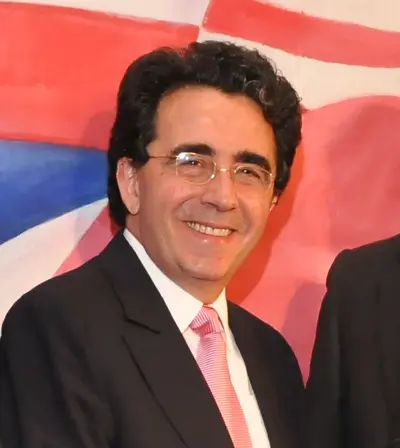
Santiago Calatrava Valls is a Spanish architect, structural engineer, sculptor and painter, particularly known for his bridges supported by single leaning pylons, and his railway stations, stadiums, and museums, whose sculptural forms often resemble living organisms. His best-known works include the Olympic Sports Complex of Athens, the Milwaukee Art Museum, the Turning Torso tower in Malmö, Sweden, the World Trade Center Transportation Hub in New York City, the Auditorio de Tenerife in Santa Cruz de Tenerife, the Margaret Hunt Hill Bridge in Dallas, Texas, and his largest project, the City of Arts and Sciences and Opera House in his birthplace, Valencia. His architectural firm has offices in New York City, Doha, and Zürich.
