William Petty Quotes
The employing the Beggars in England about mending the High-wayes, and making Rivers Navigable will make the Wool and Cattle of Ireland vend the better.
This was one of the early suggestions for providing jobs for the unemployed to work at developing the national infrastructure. In this case if highways and the river could be improved, transportation would allow goods to be reach more of the country cheaper. The CCC and the Job Corps of America would use a similar reasoning for public employment.
William Petty, 1623-1687, English Economist & Demographer, A Treatise of Taxes & Contributions, 1662
Sourced by: Eigen's Political and Historical Quotations


1st Baron Verulam. This quotation appeared on the door of the transportation building of the World's Colombian Exposition in Chicago, 1893

At the time, roads were built by the states. This was one of the first instances urging that the Federal Government take some responsibility for roads. This would culminate when President Eisenhower proposed and created the National Highway System and as Madison predicted, it would have a massive economic benefit for the nation.


This was the classic weakness of colonies where the colonial power was only interested in importing a raw material—in this case, gold. Everything else tends to be ignored—even today. With independence, things often do not change and the export of raw material like oil, tin or lumber dominates the whole economy to the exclusion of the rest of the economy


Arguing that Slavery inhibited a society from development ...
Although Madison vetoed the Federal bill to improve the national infrastructure, he was very much for the improvements and he said so in this veto message. He, however, did not see the Constitutional authority for the Federal government to appropriate moneys to be spent in the States for infrastructure improvement. He was for a Constitutional Amendment to do so or to make the improvements using State money as New York did building the Erie Canal. Alexander Hamilton, and many of the Congressmen who voted for the bill disagreed (many of whom were also in the Constitutional Convention) and did not see the Constitutional limitation that Madison did. See Hamilton’s Quote 644278. He was particularly concerned that small and less affluent states could not possibly have the skill to design these or the finances to build them. Later President’s and Congresses sided with Hamilton. It would be hard to envision America today of Madison’s view had prevailed.


Marie Joseph Paul Yves Roch Gilbert du Motier
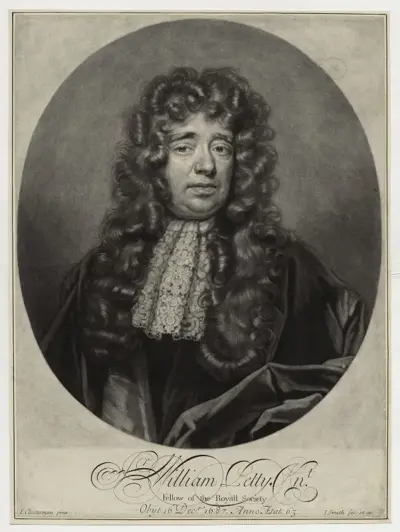
Sir William Petty FRS was an English economist, physician, scientist and philosopher. He first became prominent serving Oliver Cromwell and the Commonwealth in Ireland. He developed efficient methods to survey the land that was to be confiscated and given to Cromwell's soldiers. He also remained a significant figure under King Charles II and King James II, as did many others who had served Cromwell.
