Marquis de Lafayette Quotes
The greatness of the Erie Canal is the American equal only of its equality and liberty.
Marie Joseph Paul Yves Roch Gilbert du Motier
Marquis de Lafayette, 1757-1834, French Statesman & Major General in the American Revolutionary Continental Army, Member of the French Chamber of Deputies, Quoted on The History Channel, Modern Marvels: The Erie Canal, August 2000
Sourced by: Eigen's Political and Historical Quotations


Arguing that Slavery inhibited a society from development ...

Although Madison vetoed the Federal bill to improve the national infrastructure, he was very much for the improvements and he said so in this veto message. He, however, did not see the Constitutional authority for the Federal government to appropriate moneys to be spent in the States for infrastructure improvement. He was for a Constitutional Amendment to do so or to make the improvements using State money as New York did building the Erie Canal. Alexander Hamilton, and many of the Congressmen who voted for the bill disagreed (many of whom were also in the Constitutional Convention) and did not see the Constitutional limitation that Madison did. See Hamilton’s Quote 644278. He was particularly concerned that small and less affluent states could not possibly have the skill to design these or the finances to build them. Later President’s and Congresses sided with Hamilton. It would be hard to envision America today of Madison’s view had prevailed.


before there were railroads in the West


It was on time and on budget. It is hard to imagine that we could complete a project this large today. It would take more than 8 years to do the studies and get the permits and fight off the lawsuits. However, the engineering feat for the up and coming young country was as Clinton said, “unparalleled in the experience of mankind.” America had already exceeded the Ancient Egyptians, the Europeans, the Chinese. The economic development for the young nation was enormous—as big as the digital revolution almost two centuries later.


The Mormon settlement of the West has, from an economic development point of view, produced a successful model that few have ever even approached. Using techniques that ranged from classic capitalism to classic socialism, they blended both systems into a unique structure of their own. The results were spectacular despite the fact that the Mormons faced boycotts from manufacturers throughout the country and could borrow no money from banks, and never received any financial help from the Federal or any other government but their own. Even if they had gone into heavy debt, the results would have been spectacular, but achieving all that without any debt whatsoever is one of the most successful economic developments in the history of the world.
At the time, roads were built by the states. This was one of the first instances urging that the Federal Government take some responsibility for roads. This would culminate when President Eisenhower proposed and created the National Highway System and as Madison predicted, it would have a massive economic benefit for the nation.


Burke was one of the few in England who predicted economic and commercial success of America.
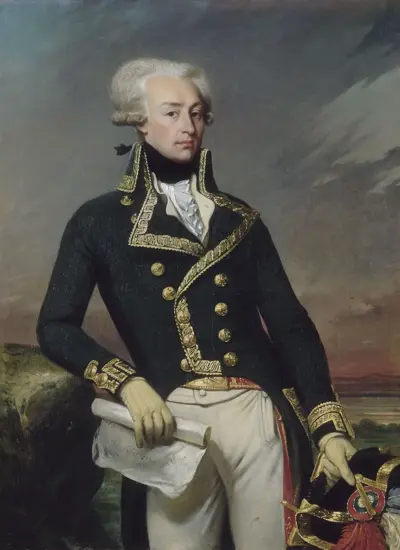
Marie-Joseph Paul Yves Roch Gilbert du Motier, Marquis de La Fayette, known in the United States as Lafayette (/ˌlɑːfiːˈɛt, ˌlæf-/, French: [lafajɛt]), was a French aristocrat and military officer who fought in the American Revolutionary War, commanding American troops in several battles, including the siege of Yorktown. After returning to France, he was a key figure in the French Revolution of 1789 and the July Revolution of 1830. He has been considered a national hero in both countries.
