Charles Francis Adams II Quotes
The real danger of the Cotton dynasty lies not in the hostility of the North, but in the exigencies of the market abroad;.
Charles Francis Adams II, 1835–1915, Historian, Civil War Colonel, Executive & Writer, President of the American Historical Association, Chairman of the Massachusetts Park Commission, President of the Union Pacific Railroad, Grandson of President John Quincy Adams, “The Reign of King Cotton”, The Atlantic Monthly, April 1861
Sourced by: Eigen's Political and Historical Quotations


The industrial revolution was also creating an entirely new form and structure for international economics.

“Laid up” means “saved”. “Commutable”means fungible—gold and silver can buy anything else.

The issue of free trade verses protectionism has been with us throughout American history with national sentiments going one way and then later the other, only to come back and the cycle has gone on. Floyd was very modern in his economic views, so much so that he, even as a Southern politician, opposed slavery on the grounds that it was economically inefficient and the South would never develop industrially if it had no incentive, as existed in the North and England, to reduce the amount of labor required for economic opportunity. He was right on that point as well.


This quotation is interesting as it shows that and the end of the 19th century, although the United States was over 100 years old, we were first beginning to be major world traders. Not that our merchant marine was not yet world class. Another interesting facet of the quote is that the President was claiming that foreign trade was good for the domestic economy. Much of America in its first 100 years supported protectionism for American manufacturers.


Hoover, a brilliant administrator, seems to have been on the wrong side of most economic issues.

He was right about what the Japanese made at the time. But they had an amazingly pragmatic solution for this problem. They simply changed all their product decision making to make the things that Americans did want. As a result they completely negated Dulles's prediction about the American Market and within a few years were exporting more manufactured goods to American than any other country.


The South’s economy was based on Cotton and the way they raised cotton depended on slaves. From the point of view of the South, giving up slavery meant economic ruin. Their great mistake many think, was to not have used the time from the American Revolution to the 1860s to diversify their economy and do what the North and the Midwest had done and industrialize. Then they could have ended slavery without the devastating economic consequence. But they did not, and the result was history for the world and disaster for the South.


U. S. Treasury Secretary Larry Summers called Rajan a “Luddite” for this view, but what Rajan observed and predicted was exactly what happened in the Meltdown of 2008 which led to the Great Recession. Rajan was one of the few economists to call this right. Several, invested their own money assuming a crash and made billions. Most, like Summers and the Federal Reserve Chairmen in retrospect admitted that they missed the signs and didn’t connect the dots. See {637168}, {637987}, and {620038}

She had warned about the unregulated derivatives 10 years earlier, but to no avail. See {637987}. Then when she had been proven prescient in the Meltdown of 2008, Congress was more interested in how she thought they could prevent future problems with derivatives. Some were adopted but not all. The financial institutions claimed that they needed derivatives to hedge positions and hence “stabilize” the system. Of the members of Congress who voted on this issue, almost none understood derivatives and credit default swaps were and how they worked. But some were sure they were bad, and others were sure that they were necessary for stability. Derivatives can, and did, get so complicated that the people who originally created them sometimes cannot tell whether they are at risk or not. Even computer cannot calculate the value and risks of these instruments because the values and risks depend on what happens to other companies or instruments which themselves have derivatives insuring them. See {620038} for a good description of the difficulty.


Most Americans were just beginning to comprehend the importance of international relations to American agriculture and our food supply.


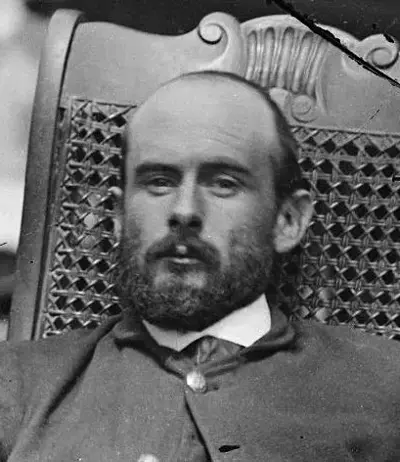
Charles Francis Adams Jr. was an American author and historian. He was a member of the prominent Adams family, and son of Charles Francis Adams Sr. He served as a colonel in the Union Army during the American Civil War. After the war, he was a railroad regulator and executive, an author of historical works, and a member of the Massachusetts Park Commission.
