Eleanor Roosevelt Quotes
Yesterday afternoon the Egyptian Minister came to bring me a gift from the first factory which had been opened in Egypt. They have always imported their linen and cotton material and for the first time they are actually making cotton and linen articles. It seemed almost incredible to me when one realizes how much cotton is grown there and that they had had no factory before for its manufacture into articles of everyday use.
Historicaly this quotation gives us an idea of how backward the Arab countries were. And at that time, Egypt was the biggest and most advanced in the Middle East.
Eleanor Roosevelt, 1884-1962, First Lady (Franklin Delano Roosevelt), U. S. Delegate to the United Nations, Column, My Day, January 15,1937
Sourced by: Eigen's Political and Historical Quotations


This same argument was used before and since to justify protecting domestic manufacturing from foreign competition until it can mature sufficiently to compete in a global economy. One difficulty occurs if protective tariffs are imposed for this reason. The manufacturers protected never seem to reach the point where they can compete without the subsidy.

The relationship of population increase economic growth is a critical one. If an underdeveloped country manages to have a 3% annual economic growth rate and also has a 3.2% population growth, at the end of the year, the average person is actually poorer than he was the previous year. South Korea, China, Thailand and India implemented successful population control and family planning programs before they were able to take advantage of economic development. To modernize, the country must be able to have a surplus of funds which can be invested in roads, schools, hospitals, and other facilities which can produce even more growth later. Too many new mouths to feed, clothe and care for can be a barrier to development even if the economy is reasonably good.


The South’s economy was based on Cotton and the way they raised cotton depended on slaves. From the point of view of the South, giving up slavery meant economic ruin. Their great mistake many think, was to not have used the time from the American Revolution to the 1860s to diversify their economy and do what the North and the Midwest had done and industrialize. Then they could have ended slavery without the devastating economic consequence. But they did not, and the result was history for the world and disaster for the South.


Earlier, Jefferson was opposed to manufacturing in America as factories were a social blight in Europe which he wanted to keep out of the United States. He felt that we could import whatever we needed from Europe and not have the evils of industrialization. However, with the War of 1812, the Barbary Pirates and his mellowing when no longer President, and his willingness to change his positions as he learned more, he issued this letter. See another the following year: {615634}. His was considered such an important change of position—today we would accuse him of a flip flop— that other journals and periodicals reprinted the letter and commented upon his change. Despite his changed position, most Americans believe that Jefferson was opposed to manufacturing and industrialization for his entire life—not just the first part.


Jorge Mario Bergoglio. The G20 refers to the 20 nations with the largest economies—the rich, developed nations.


Prevented by the Military from ever taking office

Arguing that Slavery inhibited a society from development ...


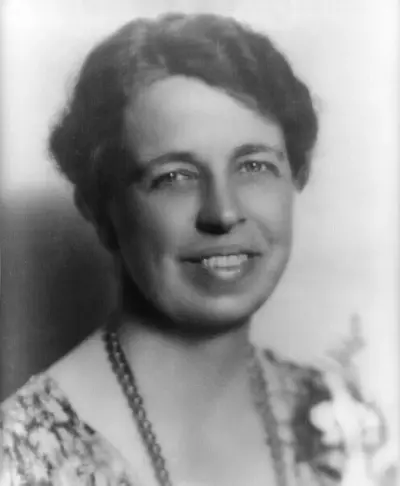
Anna Eleanor Roosevelt was an American political figure, diplomat and activist. She served as the First Lady of the United States from March 4, 1933, to April 12, 1945, during her husband President Franklin D. Roosevelt's four terms in office, making her the longest-serving First Lady of the United States. Roosevelt served as United States Delegate to the United Nations General Assembly from 1945 to 1952. President Harry S. Truman later called her the "First Lady of the World" in tribute to her human rights achievements.
