Muhammad Ali Jinnah Quotes
If Pakistan is to play its proper role in the world to which its size, manpower and resources entitle it; it must develop industrial potential side by side with its agriculture and give its economy an industrial bias. By industrializing our State, we shall decrease our dependence on the outside world for necessities of life; we will give more employment to our people and will also increase the resources of the State.
Muhammad Ali Jinnah, 1876-1948, Founder of Pakistan and First Governor General, Speech, September 26, 1947
Sourced by: Eigen's Political and Historical Quotations


This surprising quotation, along with others a far from main steam American views (See {623830} ) assured her election defeat.


This was an incredible prediction that few people thought was possible. This speech was given in the early days of WWII when it was far from clear that we would win.


The Mormon settlement of the West has, from an economic development point of view, produced a successful model that few have ever even approached. Using techniques that ranged from classic capitalism to classic socialism, they blended both systems into a unique structure of their own. The results were spectacular despite the fact that the Mormons faced boycotts from manufacturers throughout the country and could borrow no money from banks, and never received any financial help from the Federal or any other government but their own. Even if they had gone into heavy debt, the results would have been spectacular, but achieving all that without any debt whatsoever is one of the most successful economic developments in the history of the world.


In the 19th century, most socialists thought that the government was the major creator of jobs. In the 20th century, most socialists acknowledged that jobs could emanate from both the public and private sectors. Here in the 21st century, one of the world’s leading socialists, stated that private companies were necessary for full employment.


the Bolshevik Communists of Russia Zenzinov was often a critic of the Bolsheviks.

Europe was still suffering from the economic effects of the Great Recession.


Zhou , Deng and other Chinese senior leaders carefully studied failures of 200th Century Communist nation economies from Russia to North Korea, and observed the successes of not only the United States and Western Europe, but South= Korea and Thailand å well and decided to transform to a capitalist style market and competitive economy. Zhou organized a cruse on which they invited Western economists and political economists to advise on how to make the transformation. Th Chinese took many of the Western ideas, placed them into a Chinese context, added some ideas of their own and proceeded ahead with the largest and most seectaculkar economic transformation and development in World history.

In New York City for example, many more citizens and tourists go to New York Museums than attand Professional andCollege sports events. The arts are very effective economic development mechanisms ceating jobs as well as providing cultural development and entertainment for the polulace.

Arguing that Slavery inhibited a society from development ...


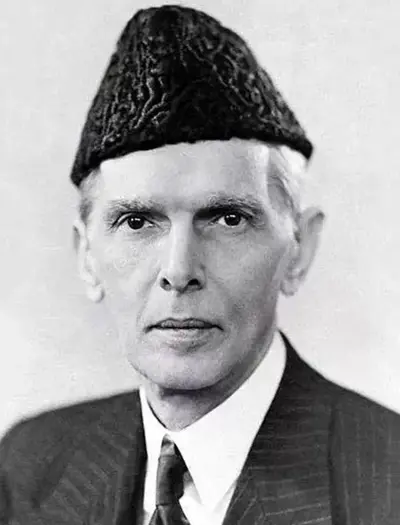
Muhammad Ali Jinnah was a barrister, politician and the founder of Pakistan. Jinnah served as the leader of the All-India Muslim League from 1913 until the inception of Pakistan on 14 August 1947, and then as the Dominion of Pakistan's first Governor-General until his death. He is revered in Pakistan as the Quaid-i-Azam ("Great Leader") and Baba-i-Qaum ("Father of the Nation"). His birthday is observed as a national holiday in Pakistan.
