Hugo Black Quotes
The Sherman Act was designed to be a comprehensive charter of economic liberty aimed at preserving free and unfettered competition as the rule of trade. It rests on the premise that the unrestrained interaction of competitive forces will yield the best allocation of our economic resources, the lowest prices, the highest quality and the greatest material progress, while at the same time providing an environment conducive to the preservation of our democratic political and social institutions.
Hugo Black, 1886-1971, U. S. Senator (Democrat, AL), U. S. Supreme Court Justice, Northern Pacific Railway Co. V. U. S., 1958
Sourced by: Eigen's Political and Historical Quotations


Here, an officer of a large corporation (Pittsburgh Plate Glass) makes the classic argument of large corporations about the anti-trust laws which prevent them from using their economic power to crush competition. The claim that the large corporations are at a disadvantage and handicapped in competing with small companies is easily refuted by the bankruptcy rate of small businesses which is large, and that of large corporations which is very small, and that of major monopolies which is virtually zero.


She was then the European Commissioner for Competition

See {642189} where Sherman explained some of the reasons for the law.


A justification of some mergers that would lessen competition was that the consumer would not be harmed as the merger will produce cost savings that could be passed on to the consumers. However, others argued that if the competition were reduced there would be no pressure on the merged companies to pass any savings along to the consumer. However, in this opinion, Justice Douglas set forth a basic principle of regulatory law: Even though the merger might have some consumer benefits, that is still no justification for doing.
Draft language is sometimes attributed to Senator George F. Hoar.

One irony that some critics of Murdoch’s enterprises make is that despite his personal views about monopoly his businesses try to attain and maintain monopoly status whenever it can.


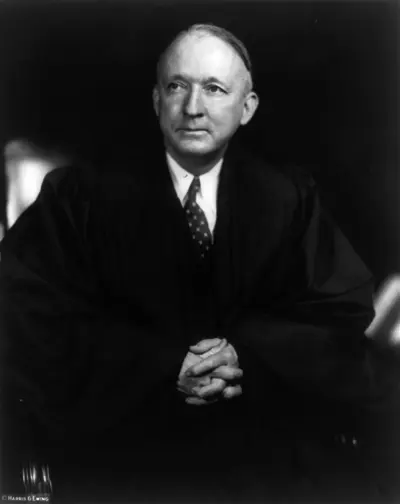
Hugo Lafayette Black was an American lawyer, politician, and jurist who served as a U.S. Senator from 1927 to 1937 and as an Associate Justice of the Supreme Court of the United States from 1937 to 1971. A member of the Democratic Party and a devoted New Dealer, Black endorsed Franklin D. Roosevelt in both the 1932 and 1936 presidential elections. Having gained a reputation in the Senate as a reformer, Black was nominated to the Supreme Court by President Roosevelt and confirmed by the Senate by a vote of 63 to 16 (six Democratic Senators and 10 Republican Senators voted against him). He was the first of nine Roosevelt appointees to the Court, and he outlasted all except for William O. Douglas.
