James Clark McReynolds Quotes
Effective competition requires that traders have large freedom of action when conducting their own affairs.
James Clark McReynolds, 1862-1946, U. S. Supreme Court Justice, Federal Trade Commission v. Curtis Publishing Co., 1922
Sourced by: Eigen's Political and Historical Quotations


Shortly thereafter, India started to reduce the protectionism.


Railroads and other large markets shared dominated by a few large corporations.


Lock’s view differs from modern American business ethics and law. He argues that regardless of circumstances a merchant may charge anything and that all consumers must be treated equally, which would eliminate preferred customers or even automobile sales practices where prices are negotiated for most vehicles. See {616334} to see how he deals with necessities of life: as issues of charity—not economics.

A justification of some mergers that would lessen competition was that the consumer would not be harmed as the merger will produce cost savings that could be passed on to the consumers. However, others argued that if the competition were reduced there would be no pressure on the merged companies to pass any savings along to the consumer. However, in this opinion, Justice Douglas set forth a basic principle of regulatory law: Even though the merger might have some consumer benefits, that is still no justification for doing.
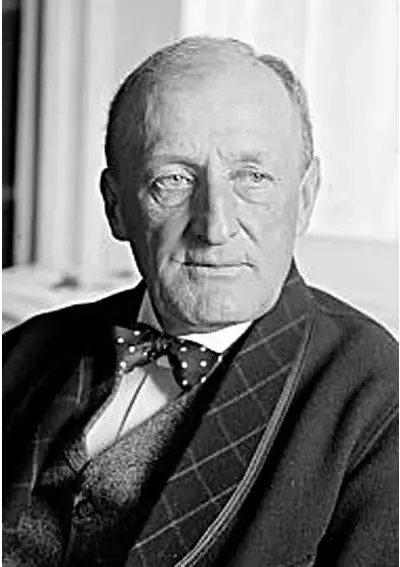
James Clark McReynolds was an American lawyer and judge from Tennessee who served as United States Attorney General under President Woodrow Wilson and as an Associate Justice of the United States Supreme Court. He served on the Court from October 1914 to his retirement in January 1941. He is best known today for his sustained opposition to the domestic programs of President Franklin D. Roosevelt and his overt racism and anti-semitism.
