Thomas R. Marshall Quotes
The people were told in the last campaign that trusts [corporate monopolies] were a natural evolution, and that the only way to deal with them was to regulate them. The people are tired of being told such things. What they want is the kind of opportunity that formerly existed in this country.
Thomas R. Marshall, 1854-1925, Governor of Indiana (Democrat), Vice President of the United States (Democrat), Quoted in Walling, Progressivism and After
Sourced by: Eigen's Political and Historical Quotations


One irony that some critics of Murdoch’s enterprises make is that despite his personal views about monopoly his businesses try to attain and maintain monopoly status whenever it can.


This is an interesting quotation because it shows that utilities and monopolies using their power and money to avoid effective pro consumer regulation is nothing new and was ongoing as soon as there were government granted monopolies that were supposed to be regulated.

The President had decided to aggressively push for railroad regulation to end the rate rebate abuses that were used to support the monopolies like Standard Oil. In vintage Roosevelt tactics, he gave his first major speech on the subject in the setting and forum that would be most opposed to it. The Union League Club of Philadelphia in included the wealthiest men in the area where were most opposed to any Federal Regulation of anything. All the major railroad executives and stock owners and traders were also members. The President wanted to persuade the opponents to change their positions, and sometimes he did. He also was driven by his concept of sports and athletics so that the “opposition” should have “fair notice” for the contest ahead.

The “rebate agony” referred to a corrupt practice of the Railroads and the Large Monopolies. The railroads charged a very high rate for the transportation of important products like beef and oil. However, secretly they gave back a large percentage of the transportation rate charged to the trusts. They in turn could cut their prices and undersell all the smaller competitors who were paying “full freight” and could not afford to match the lower price. As soon as the smaller competitors were driven out of business in an area, the trust raised its rates even higher than they charged originally. The Railroad had made a small but reasonable profit on the freight of the trusts but they were guaranteed all their business. They also made huge profits on the higher rates that the small companies paid until those companies were driven out of business. Journalists like Ray Baker and Ida Tarbell had uncovered the rebate scheme which enabled the trusts to steal high amounts from the general public through unreasonably high prices. President Theodore Roosevelt was committed to try and regulate the railroads and not allow rebates but charge the same public rate to all with no rebates. Socialists like Sinclair, thought that this attempt would be hopeless—that the damage had already been done, and the trusts now had so much money that they could buy state legislatures and many in Congress to preserve their dominance.


In 1881 this view was that of a radical political outlier. In the first decades of the 21st century, this was a generally acceptable political viewpoint held by members of both major political parties.


TR came from a wealthy, upper class family, and because of his position favoring regulation of corporations he was called a traitor to his class by many.
Drafted by their presidential candidate, Robert M. La Follette


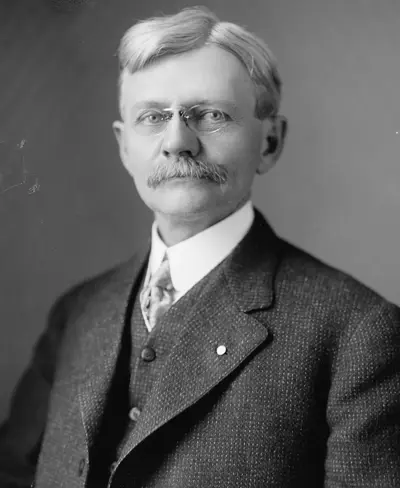
Thomas Riley Marshall was an American politician who served as the 28th vice president of the United States from 1913 to 1921 under President Woodrow Wilson. A prominent lawyer in Indiana, he became an active and well known member of the Democratic Party by stumping across the state for other candidates and organizing party rallies that later helped him win election as the 27th governor of Indiana. In office, he proposed controversial changes to the Constitution of Indiana; the state courts blocked his attempts.
