Chamber of Commerce Quotes
What has happened in the case of the Standard Oil Company may happen in other lines of business …. what is to prevent commerce in the rest of the great staples from being monopolized in a similar manner? Already it is taking this course. One or two firms in Baltimore, Philadelphia, New York, and Boston, with their branch houses in the West, are, by the favor of the railroads, fast monopolizing the export trade in wheat, corn, cattle, and provisions, driving their competitors to the wall with absolute certainty, breaking down and crushing out the energy and enterprise of the many for the benefit of the favored few.
At the time, the Chamber of Commerce represented the small and medium business which were being decimated by the large businesses and their monopolies. A century later, the Chamber became a creature of the large business and their money and by 2010, the Chamber had virtually become the representative of the large businesses outside of the high technology field and had become a campaigning arm of the Republican Party, In 1880 however, they called public attention to the abuses of the large corporate monopolies.
Chamber of Commerce, Report, New York, February 5, 1880
Sourced by: Eigen's Political and Historical Quotations


Here, an officer of a large corporation (Pittsburgh Plate Glass) makes the classic argument of large corporations about the anti-trust laws which prevent them from using their economic power to crush competition. The claim that the large corporations are at a disadvantage and handicapped in competing with small companies is easily refuted by the bankruptcy rate of small businesses which is large, and that of large corporations which is very small, and that of major monopolies which is virtually zero.


Most companies in a capitalistic system compete mightily to obtain monopolistic positions so they can avoid capitalistic competition thereafter.


Draft language is sometimes attributed to Senator George F. Hoar.

The National City Company was formed expressly as an attempt to dominate and monopolize the United States economy. It was a holding company that included Standard Oil, National City Bank, 16 other banks, and the Union Pacific and Southern Pacific railroads among others, all controlled by the same 3 men--William Rockefeller, .James Stillman, and Frank Vanderlip.


The only previous source of light in America had been whale oil or candles—both very expensive. Oil was discovered in Pennsylvania and refinery techniques developed to produce Kerosene. (Gasoline was too explosive and dangerous for home use.) Everyone’s standard of living depended on Kerosene at the time and John D. Rockefeller controlled the price everywhere except New York. There were no monopoly or antitrust laws when he gobbled up his competitors and he rapidly became the richest man in America and one of the most hated. His abuse of the system at the time led to the government regulation of monopolies and the antitrust laws. It was very courageous for the Atlantic Monthly to publish this article, as Rockefeller’s power extended all over the nation—but less in New York where the magazine was published.
Patents, copyrights, and franchises are but 3 common (and legal) ways of obtaining a onopoly position.See Adam Smith {627790} for a similar thought.

This is an important quotation because Ellison, one of the best businessmen in the world is also much more candid than most others. Here he admits that he strives to achieve monopoly status for his company. Almost all large businesses try to become monopolies so that they do not have to compete on price, quality, and service. Few will admit publicly that much of their effort goes towards an objective that is detrimental to the nation and society and in is in large part illegal.

While this statement seems totally absurd to us today, at the time most politicians and judges believed it. Only the left wingers and the populists opposed the doctrine as well as most business owners who knew the truth but of course most preferred the have their own monopoly. One of the reasons the large American corporations did not want Jewish and Chinese immigrants is that those cultures supported highly competitive businesses and might give consumers a better deal or worse, their culture would argue for less monopoly and more competition. For more than half a century AT&T was given a monopoly over almost all telephone service in the United States. Finally the Federal Courts saw through the company propaganda, and ordered AT&T broken up. The “Baby Bells” have persuaded most state legislatures and regulatory bodies of this same argument, and almost every community of the United States has a monopoly on local wired local telephone service. The same is true about water and electricity and a great deal of American transportation. Every major company strives for as much of a monopolistic position the government will allow; some are overt like the electrical companies. Others are more subtle and use copyright and patents to be sure that there is no price or service competition. Fortunately, the high tech industry is to technologically competitive that prices have been have been going down constantly not like telephone and Internet connectivity, entertainment, education, and professional services.

The President had decided to aggressively push for railroad regulation to end the rate rebate abuses that were used to support the monopolies like Standard Oil. In vintage Roosevelt tactics, he gave his first major speech on the subject in the setting and forum that would be most opposed to it. The Union League Club of Philadelphia in included the wealthiest men in the area where were most opposed to any Federal Regulation of anything. All the major railroad executives and stock owners and traders were also members. The President wanted to persuade the opponents to change their positions, and sometimes he did. He also was driven by his concept of sports and athletics so that the “opposition” should have “fair notice” for the contest ahead.

She was then the European Commissioner for Competition


He was the judge who presided over the breakup of AT&T in 1984
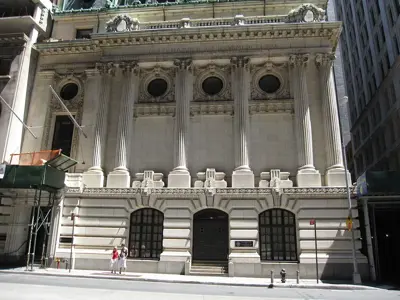
A chamber of commerce, or board of trade, is a form of business network, for example, a local organisation of businesses whose goal is to further the interests of businesses. Business owners in towns and cities form these local societies to advocate on behalf of the business community. Local businesses are members, and they elect a board of directors or executive council to set policy for the chamber. The board or council then hires a President, CEO or Executive Director, plus staffing appropriate to size, to run the organisation.
