Bertrand Russell Quotes
The Christian religion, as organized in its churches, has been and still is the principal enemy of moral progress in the world.
3rd Earl Russell of Kingston
Bertrand Russell, 1872-1970, British Philosopher & Reformer, Why I Am Not a Christian, 1927
Sourced by: Eigen's Political and Historical Quotations
_0_thumbnail_47x47.jpg "Statue of Robert Hall in Leicester.")
Many of the founding fathers were aware of such views in England as the same issues were being debated in America in the debates on Ratification of the Constitution and the required inclusion of the Bill or Rights—specifically the First Amendment.


He was the only English Pope. The act of invasion had been sanctified earlier in Adrian’s Papal Bull. See {610518}. Henry’s invasion was successful but the occupation and reform was a disaster which has ramifications to this day.


The Papacy was at one of it’s lowest points. Two men, Clement and Urban, both claimed the Papacy and each had raised an army to fight the other. Each was promising indulgences to those who would fight, and in a modality similar to the Muslim terrorists of the 21st century, the soldiers were promised ascendancy to Heaven if they fell in battle for such a holy cause. The armies of the popes marched under the cross as their banner, and Wycliffe found that obscene and actually wrote a treatise saying so. See {618087}.

The implication of a double moral standard for adherents of the faith and for others has been characteristics of many religions.

Note that Madison’s criticism of Christianity is not theological, but humanistic and political. See {620779} for his view on religion in general.


Of all the Western Colonial Powers, Spain was the worst. They took the most from their possessions and contributed the least. Worst, they killed off almost all the indigenous people.

This was before the state had officially sanctioned and accepted the church. Most of the institutions were pagan and the kings had subjects of both religions with Christianity not yet dominant. Yet among Christians, the Church had government temporal power, even before the church was allied with the state.

The clergy of the colonies were split on the American Revolution, but those clergy who supported the revolution made a huge contribution to the individual American’s intellectual view of the legitimacy of Parliament’s making laws governing the American Colonies. The anti-British clerics called for action while other forces of colonial America urged caution.

Blacks in America are generally more religious than whites and almost all religious Blacks are Christian. As such, they tend to be very forgiving, non-violent, and more tolerant of sin and wrong than whites are. Foreman and others believe if Blacks had not been so Christianized, they would have been more rebellious, more violent and more vengeful than there were and are. This may well have been better for them in terms of American History and in getting more of the “pie” of contemporary society.”


This argument—that Christians were more cruel and uncivilized than heathens in some respects was very persuasive to many serious white Christians who began to see slavery and the slave trade in a new light.

This title of his essay shocked his fellow politicians and may churches that a Congressman would attack churches. Few abolitionists were that outspoken over the disgraceful role that most American Churches had in refraining to oppose slavery. At the time, most Protestant, Roman Catholic, and Jewish clerics either supported slavery or were reluctant to publicly criticize slavery. At the same time the Quakers and many other congregations and clergymen were among the most outspoken and fervent abolitionists. They were very much in the minority,

Jefferson’s concern over issues of church state separation and independence was expressed early when he was a young lawyer.

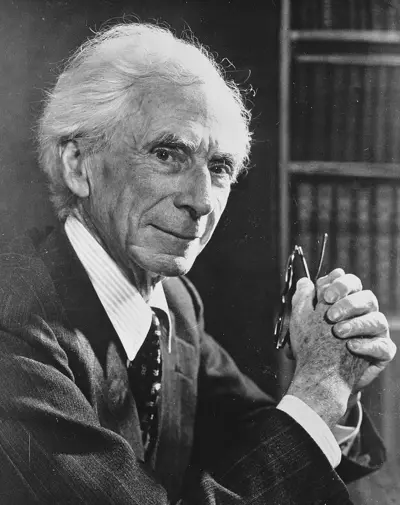
Bertrand Arthur William Russell, 3rd Earl Russell OM FRS was a British polymath, philosopher, logician, mathematician, historian, writer, social critic, political activist, and Nobel laureate. Bertrand Russell was one of the most influential and widely known intellectual figures of the twentieth century. In 1950 he was awarded the Nobel Prize in Literature for his extensive contributions to world literature and for his “rationality and humanity, as a fearless champion of free speech and free thought in the West.“
