Lord Acton Quotes
The principle of the Inquisition was murderous. . . . The popes were not only murderers in the great style, but they also made murder a legal basis of the Christian Church and a condition of salvation.
Acton, John Emerich Edward Dalberg. Letters of Lord Acton to Mary, Daughter of the Right Hon. W.E. Gladstone. George Allen, 1904, p. 185.


The King, a religious exremist fanatic, was a great supporter of the Inquisition whose excesses were horrible during his reign.


This argument—that Christians were more cruel and uncivilized than heathens in some respects was very persuasive to many serious white Christians who began to see slavery and the slave trade in a new light.


The Christian Roman Empire was split in two—a Western (Latin) Empire led by the Roman Catholic Church in Rome, and the Eastern (Greek) Roman Empire led by the Orthodox Church headquartered in Constantinople (Byzantium). The two churches were not only in a theological conflict but violence broke out and the armies of the two religious empires attacked each other now and then. In 1439, leaders of the two versions of Christianity met in Florence, and they agreed to reunuion in which the Eastern Orthodox would again acknowledge the authority of the Pope. This was not a popular agreement with the majority of the Eastern Orthodox people and some of the clerical leadership. Constantine, realizing that he did not have pubic support at home for the end to the schism and the acceptance of the authority of the Pope, kept stalling on officially announcing and implementing the unity treaty. The Pope’s patience was wearing thin. Constantine did not adhere to ther treaty and the two churches have been apart ever since.

Lotario de' Conti

In the midst of the Argentine Dirty War where the right wing government was murdering and torturing their political enemies of the left, most of the Catholic Church Priests and other Church Authorities had sided with the government and morally overlooked their atrocities and crimes against humanity. Others were fearful as Bishop Enrique Angelelli had been murdered by the military death squads in 1976. Bishop Hesayne was one of the few members of the Church hierarchy who criticized church officials for their silence.


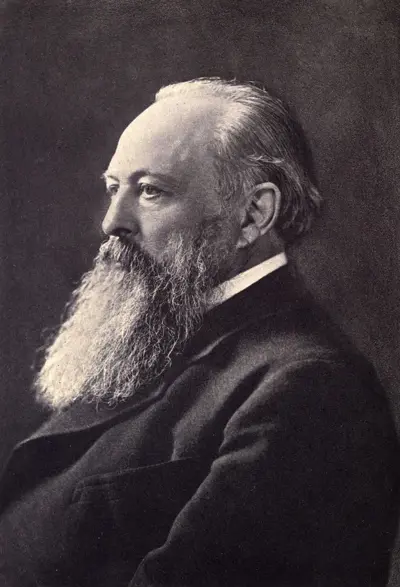
John Emerich Edward Dalberg-Acton, 1st Baron Acton, 13th Marquess of Groppoli, better known as Lord Acton, was an English Catholic historian, politician, and writer. He was the only son of Sir Ferdinand Dalberg-Acton, 7th Baronet, and a grandson of the Neapolitan admiral and prime minister Sir John Acton, 6th Baronet. Between 1837 and 1869 he was known as Sir John Dalberg-Acton, 8th Baronet.
