Rhode Island Quotes
Roman Catholics shall not enjoy the rights of freemen.
Roger Williams, the founder of Rhode Island had provided in its charter for freedom of conscience. See {624148}. However later the Colonial legislature withdrew the franchise from Roman Catholics. Despite this temporary restriction of religions freedom, Rhode Island and Connecticut were far ahead of the other New England colonies in freedom of conscience.
Rhode Island, Law Passed by the Colonial Legislature
Sourced by: Eigen's Political and Historical Quotations

Despite this clear statement, later the Colonial legislature withdrew the franchise from Roman Catholics. See {624149}. Despite this temporary restriction of religious freedom, Rhode Island and Connecticut were far ahead of the other New England colonies in freedom of conscience.
Williams was the first theologian who not only advocated religious toleration but argued that Christianity demanded it and the separation of church and state.

New Ross was under siege by Cromwell and his English Parliamentarian troops. After two days, the town tried to negotiate terms of surrender and one of the main things they asked for was freedom of religion to practice Roman Catholicism. This famous response set the stage for religious bigotry over the next years. Cromwell’s reasons for not allowing Catholicism to be practiced was not only one of religious zeal. At the time, the Roman Catholic Church was a major geopolitical power under a Pope who commonly supported or even dispatched troops for geopolitical and religious ends. The Vatican was particularly resentful of England for separating from the Church and asserting that the King of England was the head of the Church and not the Pope. Therefore Cromwell and many Englishmen had to deal with the reality that every practicing Catholic in the realm was a potential spy, traitor, and/or rebel. This fear of control of countries by the Pope strongly affected America, and was responsible for the defeat of the first Catholic Presidential Candidate, Al Smith. It was also a major factor in the election of John F. Kennedy so he dealt with it head on.

Martin wanted William Howard Taft to answer questions about his religious beliefs. Taft was TR’s selection to be his successor. Ironically, a starting with John F. Kennedy, many presidential candidates have been asked about their religious belief’s and have answered whereas Roosevelt would have them not reply to such inquiries.


Porush was one of the Haradi--ultra-orthodox Jews. In the land of the Jewish people, he argued against religious freedom for Jews unless they were Orthodox Jews, while ironically, the majority of Jews in the world and even in Israel followed the Conservative or Reform branches of Judaism or were secular. At the time the Orthodox Jewish movement was the only one that was recognized officially by the government. Porush and some of the more fanatical Haradi were determined to keep the Conservative and Reform Jewish branches unrecognized and unsupported by the government. (Israel does not have separation of church and state and economically supports the Orthodox Jewish establishment but not the other majority branches of Judaism.) The "Women of the Wall" is one of the major groups in Israel advocating equal government treatment for all citizens o0f Israel. Orthodox Judaism, like many other orthodox religions are very sexist and women were actually banned from praying at the holiest of Jewish places, the Western or Wailing Wall. Women of the Wall had won a major decision of the Israeli Supreme court that women could not be denied the right to pray at the Wall. The orthodox rabbis who the government allowed to control access to the Wall, set aside a small area for women at the "Dung Gate" where the garbage was carried out. Women of the Wall were back in court and this prompted Porush's outburst. He was cebsured by the Ethics Committee of the Israeli Knesset (Parliament).

He lost be 2 votes.

Wesley had been to Island several times and was interested in affairs there. He was a strong advocate of freedom of religion but the violence of the earlier religious conflict made him very wary of the Irish Roman Catholics who seemed to him particularly prone to religious violence.


In this extraordinary act, the people who are persecuted are made to pay extra taxes to facilitate their persecution


This was one of the strongest statements of religious freedom in America prior to the Bill of Rights which came over a decade later.

See Justice Richard Cox for a similar view.


It was not until 1780 that Catholics were allowed to even be members of Town Corporations.

Catholics were blamed by some for the defeat of Henry Clay in 1844. Anti catholic sentiment was high:. Johnson was then a Congressman representing a district where there were few Catholics and strong anti-Catholic feeling.

Lopez had come from Portugal and had been living in Rhode Island for 9 years and was active in shipping, whaling and candle making. He, and another Jew, Issac Elizer, petitioned the Rhode Island Superior Court for naturalization and citizenship rights. The court turned them down and they appealed to the Rhode Island Assembly—then not only the legislature but the highest court in the colony. The assembly came up with a compromise. The Jews were allowed to continue to live and work in Rhode Island but they could not hold public office or vote. They told the Superior Court to reconsider the case however as Lopez and Elizer were model citizens—but for religion just the kind the colony wanted. This case and many others were known to the founding fathers who were determined to put a stop to the practice of conditioning voting and office holding rights on adhering to the particular sect of the majority of the colony. Lopez and Elizer then appealed again to the Superior Court.


Both Puritans and Quakers were persecuted and physically abused in England by the Anglican Church. The Puritans as soon as they became dominant in part of the American colonies began persecuting Quakers. The Quakers who were the majority in the Pennsylvania colony, however were tolerant of other religions. This history was another of the many reasons the Founding Fathers wanted no established church. A “scorpion” was a type of whip that was particularly painful.


Vladimir Lenin. In their quest for world revolution, the Russian Communists had more problems with arguments in the United States whose reforms and economy had produced a very high standard of living. They knew that to effect a revolution, they had to reach the middle class and the intellectuals. They had little economically to attack America with but they were able to attack the United States morally. In addition to religious discrimination, the Communists attacked other forms of discrimination anti-Black, legal, racial segregation (See behavior in the related quote.)

This is a particularly interesting historical quotation because it succinctly gives a history of the various horrors of religious strife in British history—a history that was very well known to the American Founding Fathers and the general American Colonial population. This history was the major driver behind the public insistence for the Bill of Rights and the 1st Amendment which erected a wall of separation between church and state with government never favoring or abetting any particular religion.
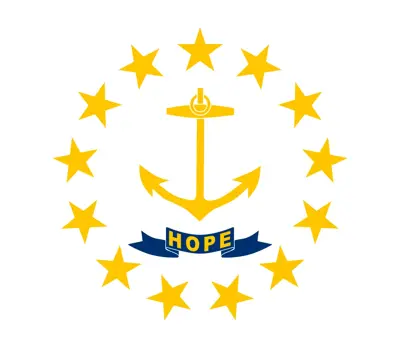
Rhode Island (/ˌroʊd -/ (listen), like road), officially the State of Rhode Island, is a state in the New England region of the United States. It is the smallest U.S. state by area and the seventh-least populous (1,059,361 as of 2019), but it is also the second-most densely populated behind New Jersey. The state takes its name from Rhode Island; however, most of the state is located on the mainland. The state has land borders with Connecticut to the west, Massachusetts to the north and east, and the Atlantic Ocean to the south via Rhode Island Sound and Block Island Sound. It also shares a small maritime border with New York. Providence is the state capital and most populous city in Rhode Island.
