William King Quotes
Papists should be debarred from all public trust.
See Justice Richard Cox for a similar view.
William King, 1650-1729, Protestant Archbishop of Dublin, Founder of the Dublin Philosophical Society, Irish Government Commissioner, Quoted in Roy F. Foster, Modern Ireland: 1600-1972
Sourced by: Eigen's Political and Historical Quotations

This quotation was used by the Lyndon B. Johnson 1964 Campaign as: “We represent the majority of the people in Alabama who hate niggerism, Catholicism, Judaism, and all the isms of the whole world.” So said Robert Creel of the Alabama Ku Klux Klan. He also said, “I like Barry Goldwater. He needs our help.” The second statement was made at a different time.

It was not until 1780 that Catholics were allowed to even be members of Town Corporations.


Poland was one of the Nazi occupied nations which cooperated in the mass murder of Jews and facilitated the Holocaust. Even after the war, much of the Polish Catholic clergy maintained virulent anti-Semitic views and in 1946 Polish thugs with the encouragement of some priests engaged in a pogrom in Kielce of returning Polish Jewish refugees. Catholic Primate of Poland, Augustus Hlond, made numerous anti-Semitic statements further exacerbating the problem. Many cast blame on Pope Pius XII who was not very vocal during the Nazi era regarding the ill treatment and murder of Jews, Gypsies, and handicapped, giving a “green light” to the Polish Prelate and those lower anti-Semitic priests. Papal apologists note that Hitler could have turned on the Catholic Church; the Pope had to walk a fine line between condemning evil and risking the welfare of the Church. Nonetheless, many Catholic priests risked and some lost their lives speaking out against the Nazi evil and protecting Nazi targets.


Lopez had come from Portugal and had been living in Rhode Island for 9 years and was active in shipping, whaling and candle making. He, and another Jew, Issac Elizer, petitioned the Rhode Island Superior Court for naturalization and citizenship rights. The court turned them down and they appealed to the Rhode Island Assembly—then not only the legislature but the highest court in the colony. The assembly came up with a compromise. The Jews were allowed to continue to live and work in Rhode Island but they could not hold public office or vote. They told the Superior Court to reconsider the case however as Lopez and Elizer were model citizens—but for religion just the kind the colony wanted. This case and many others were known to the founding fathers who were determined to put a stop to the practice of conditioning voting and office holding rights on adhering to the particular sect of the majority of the colony. Lopez and Elizer then appealed again to the Superior Court.

This quotation was uncovered in 2010 when more of the Nixon White House tapes were released. Nixon tended to have the worst stereotyped view of all minority groups. At one level, Nixon was just being political by not inviting any Jews except supporters. However, he did not maintain that same criterion regarding Protestants, Catholics, or other religious groups. The reality was that Nixon was generally very anti Semetic but saw some Jews as “good Jews” like his Secretary of State Henry Kissinger and Golda Meir, the Israeli Prime Minister in whose honor the dinner was being held. See {621141} as an example.
In this speech, and in {634756}, he argued against unification to a public that was mostly opposed. The leadership was interested because they were facing the Muslim Ottoman Turks who were getting more powerful each day. The Eastern Emperor, Constantine XI, more of a soldier and politician than a cleric, wanted the military strength of the Franks and other Western European Christian armies to help protect the Eastern Empire and Byzantium and were willing to reunite under the Pope to get it. Gennadios and his faction were not. They prevailed and the next year, the Muslims conquered Byzantium which had little help from the armies of the Western Roman Empire.


The attitude of the non-Muslims at that time was based on the Muslim attacks in the Punjab on Sikhs where entire Sikh villages and neighborhoods in towns and cities were murdered—every man woman and child. In many cases women were first raped. The Muslims had been whipped up by the leaders of the Muslim League to put terrorist pressure on the Sikh, Hindu and British to meet the League's political and territorial demands for an Independent Pakistan. Soon there was retaliation in kind and there were many Hindus, Sikhs and Muslims engaged in internecine slaughter and behaving "little better than animals".


Formally and informally orthodox Islam is one of the most sexist of the religions. In addition to the fundamentalist Christian and Orthodox discriminatory view of females, Sharia—Islamic Law—makes a woman’s testimony in court with half that of a man, prohibits women from clerical leadership, will not allow females to pray in Mosques in the main section but segregates them, and many others. Islamic customs require women to be covered head to toe in a cloak, forbids them from driving in some countries, does not allow them to be in the presence of men outside the family, mutilates young girls in brutal circumcision rituals, and many others. Not all Muslims are sexist and many call for reforms like Nomani. Turkey, the most modern and successful Islamic nation, outlawed all these discriminatory aspects of Sharia, and gave women the vote BEFORE America did.

Uriah Phillips Levy, 1792-1862, was the first Jewish naval captain of the United States Navy. He was acknowledged by the Secretary to be qualified for promotion to Commodore but there was much anti-Semitic opposition among the other senior officers. The Secretary justified his refusal to promote Levy because of. Levy was finally appointed Commodore.


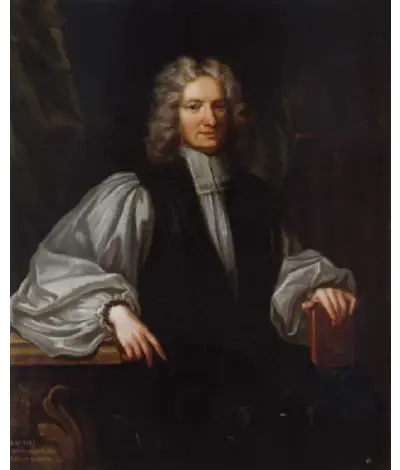
William King was an Anglican divine in the Church of Ireland, who was Archbishop of Dublin from 1703 to 1729. He was an author and supported the Glorious Revolution. He had considerable political influence in Ireland, including for a time what amounted to a veto on judicial appointments.
