New York State Quotes
And whereas we are required, by the benevolent principles of rational liberty, not only to expel civil tyranny, but also to guard against that spiritual oppression and intolerance wherewith the bigotry and ambition of weak and wicked priests and princes have scourged mankind, this convention doth further, in the name and by the authority of the good people of this State, ordain, determine, and declare, that the free exercise and enjoyment of religious profession and worship, without discrimination or preference, shall forever hereafter be allowed, within this State, to all mankind: Provided, That the liberty of conscience, hereby granted, shall not be so construed as to excuse acts of licentiousness, or justify practices inconsistent with the peace or safety of this State.
This was one of the strongest statements of religious freedom in America prior to the Bill of Rights which came over a decade later.
New York, State Constitution, April 20, 1777
Sourced by: Eigen's Political and Historical Quotations

This is the first American ordinance of freedom of conscience. Note that it only provided freedom of religion for Christians. However, that was an important first step as different sects of Christianity had been persecuting each other whenever the opportunity arose.


Despite this clear statement, later the Colonial legislature withdrew the franchise from Roman Catholics. See {624149}. Despite this temporary restriction of religious freedom, Rhode Island and Connecticut were far ahead of the other New England colonies in freedom of conscience.
Williams was the first theologian who not only advocated religious toleration but argued that Christianity demanded it and the separation of church and state.


The then current example was with same sex marriage. Some people who claimed that their religion declared same sex marriage as a sin and prohibited their aiding and abetting that activity. As a result, they claimed that their right of religious freedom allowed a county clerk to refuse to issue the marriage license or a hotel to refuse to allow a gay couple to rent their facility for a wedding, or a retail store to refuse to sell the couple bedding.

This was in effect a “Real Estate Promotional Document. Unlike the New England colonies the Carolinas had freedom of and from religion right from the beginning and it was used as an advertising point to get colonists. See {611573} and {611571} for other “features.”
At first this clause appears to be very enlightened and establishing freedom of conscience. This clause allowed Catholics to practice freely whereas in other colonies they could not. However, as one reads on, it becomes clear that the “tolerance” is limited to Christians only. Then if one examines the exception within the parentheses and refer to the rest of the act—see {611994}—, one finds that even Christians who have certain theological beliefs are to be put to death—those for example who deny the holiness of the Trinity such as Unitarians who were a major group in the New England Colonies. It was a significant step at the time however to protect Roman Catholics.


There was freedom of religion for Protestants in early New Jersey. Note that Catholics and Jews were not allowed to hold office. This constitution was in force until 1844 when the prohibition was repealed by new constitution. Under the original constitution, men were convicted for blasphemy. See {621063} .

Martin wanted William Howard Taft to answer questions about his religious beliefs. Taft was TR’s selection to be his successor. Ironically, a starting with John F. Kennedy, many presidential candidates have been asked about their religious belief’s and have answered whereas Roosevelt would have them not reply to such inquiries.

New Ross was under siege by Cromwell and his English Parliamentarian troops. After two days, the town tried to negotiate terms of surrender and one of the main things they asked for was freedom of religion to practice Roman Catholicism. This famous response set the stage for religious bigotry over the next years. Cromwell’s reasons for not allowing Catholicism to be practiced was not only one of religious zeal. At the time, the Roman Catholic Church was a major geopolitical power under a Pope who commonly supported or even dispatched troops for geopolitical and religious ends. The Vatican was particularly resentful of England for separating from the Church and asserting that the King of England was the head of the Church and not the Pope. Therefore Cromwell and many Englishmen had to deal with the reality that every practicing Catholic in the realm was a potential spy, traitor, and/or rebel. This fear of control of countries by the Pope strongly affected America, and was responsible for the defeat of the first Catholic Presidential Candidate, Al Smith. It was also a major factor in the election of John F. Kennedy so he dealt with it head on.


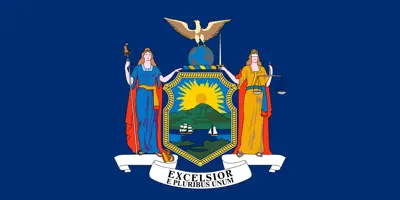
New York is a state in the Mid-Atlantic and Northeastern regions of the United States. It was one of the original thirteen colonies forming the United States. With a total area of 54,556 square miles (141,300 km2), New York is the 27th largest state; its population of more than 19 million people as of 2020 makes it the fourth most populous state in the U.S. The state is bordered by New Jersey and Pennsylvania to the south and Connecticut, Massachusetts, and Vermont to the east; it has a maritime border with Rhode Island, east of Long Island, as well as an international border with the Canadian provinces of Quebec to the north and Ontario to the northwest. It is sometimes referred to as New York State to distinguish it from New York City, which is its largest city.
