George Fox Quotes
Parliament should be broken up, and the Speaker plucked out of his chair.
This was taken by some as prophesy or what Quakers refer to as “specific fore-seeing.”
George Fox, 1624-1691, English founder of the Society of Friends (Quakers), Statement to Judge Fell and Justice Benson, Shortly thereafter Cromwell ejected the "Rump" Parliament on April 20th, 1653
Sourced by: Eigen's Political and Historical Quotations

Fox, the Quaker founder, dispatched Aldam to petition Oliver Cromwell for relief of the persecution of the Quakers. Cromwell at first maintained that he was unaware of these organized governmental persecutions so Aldam and another Quaker, Anthony Pearson, collected the writs of many Quakers who were in Jail. Aldam returned and presented these to Cromwell who, having his own political difficulties choose not to get involved as a substantial part of his political support saw Quakers as heretics. Aldam then removed his hat and rendered it into pieces uttering the quotation which might have been interpreted as a curse. Quakers had a concept of—see {611244} for another—“specific fore-seeing” which others might call prophesy. Shortly thereafter Cromwell was deposed.

At the time there was no concept of serious separation of powers. For all practical purposes, the King ruled and he shared some of his powers with the Parliament. The next centuries in England would see the great battle for governmental power between the monarch and the Parliament. Today, the British monarch has no power but still retains a great deal of influence in England but largely because Queen Elisabeth is so well loved and respected.


2nd Earl Grey


This was Executive Privilege of the time. The result of this type of conflict between the executive and the legislative body was a Civil War in which Parliament won. This concept of executive privilege operates to this day in America where the President typically refuses to have his special assistants and staff be questioned by Congressional investigating committees. IT also extends to documents where the President has refused to allow Congress access to papers. In the Watergate scandal, it was the Supreme Court Decision that President Nixon could not claim Executive Privilege with respect to the Watergate tapes. Their exposure forced his resignation.

At the time, the House of Lords which was made up of aristocrats who inherited their titles and the Lords could undo any legislation that was passed by the House of Commons. This gave the aristocrats of England a veto on all legislation.


Sealed under duress and later repudiated by the King with Papal assistance

This notion seems to have first been expressed by Edward S. Corwin in 1940


The “abrupt departure” referred to the Tories. The phraseology is today almost comical were it not so serious a matter. This first New Hampshire Constitution was a very short one developed quickly out of necessity.

1st Duke of Wellington

He was expelled from Parliament for such.


Debbs had been jailed for speaking out against the First World War. The Espionage Act forbade anyone from criticizing the war effort. (See {585905}). Later it was to be declared unconstitutional. However, Debbs had gotten more than 5 percent of the vote in 1912, competing against Wilson, Taft and Teddy Rosevelt. (There were 2 “third party candidates” in that election.) So Debs ran again in 1920. However, he was in jail. So he used the fact as a slogan. Amazingly, he actually obtained over 3 percent of the vote without ever leaving his jail cell. Later, President Warren G. Harding not only pardoned Debbs, but entertained him at the White House the next day.


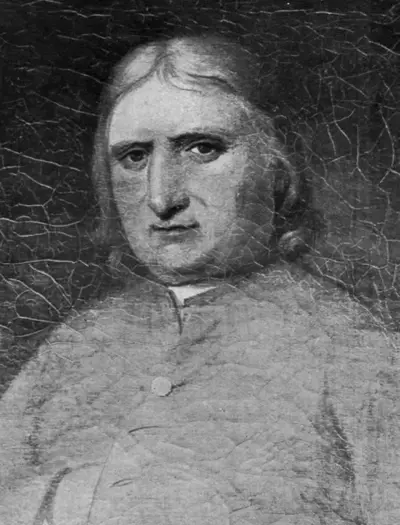
- Born: July 27, 1624
- Died: January 13, 1691
- Nationality: English
- Profession: Founder Religious Leader Quakers
George Fox was an English Dissenter, who was a founder of the Religious Society of Friends, commonly known as the Quakers or Friends. The son of a Leicestershire weaver, he lived in times of social upheaval and war. He rebelled against the religious and political authorities by proposing an unusual, uncompromising approach to the Christian faith. He travelled throughout Britain as a dissenting preacher, performing hundreds of healings, and often being persecuted by the disapproving authorities. In 1669, he married Margaret Fell, widow of a wealthy supporter, Thomas Fell; she was a leading Friend. His ministry expanded and he made tours of North America and the Low Countries. He was arrested and jailed numerous times for his beliefs. He spent his final decade working in London to organise the expanding Quaker movement. Despite disdain from some Anglicans and Puritans, he was viewed with respect by the Quaker convert William Penn and the Lord Protector, Oliver Cromwell.
