William Johnson Quotes
It is evident that that Settlement forming at the Post of St. Vincent is in every respect of the most dangerous Tendency and must have the effect to keep us entangled in perpetual Dispute and Quarrel with the Indians. Therefore, it is his Majesty's Pleasure that you give Notice to the Inhabitants of that Place forthwith to retire from it.
Not all whites were allowed to usurp all Indian lands. There were many attempts to limit white settlement to avoid friction with the Indians although the overall tendency was for the whites to take over and dominate the land.
William Johnson, 1715–1774, Superintendent of Indian Affairs for the Northern Colonies of British America, Major General of the English Forces in North America, Instructions to General Gage
Sourced by: Eigen's Political and Historical Quotations

In the midst of the French & Indian Wars, the Board of Trade drafted the royal proclamation of October 7, 1763, forbidding the granting of lands in the vast interior, which was specifically reserved to the Indians. Most whites, themselves interested in land, saw this as a temporary expediency only. This quotation must be viewed in juxtaposition with his of 1767 on the subject: {624055}


The central Indian policy problem for Jefferson’s Administration was the fact that most Indians hunted for subsistence and the amount of land needed to support a hunting society was per capita much greater than an agricultural and especially an industrial one. Jefferson had no personal animosity against the Indians as many in his day did. But he perceived the need to obtain Indian lands for white agricultural use.


Despite Jefferson’s reasonable intentions towards the Indians, all the boundaries never did get fixed and existing agreements and treaties were abrogated usually by whites acting illegally but then were supported by their state government and if serious hostilities broke out, the Federal government usually entered the fray to defend the whites regardless of whether or not they abrogated the treaties. Some Indian nations complicated the situation by having a tradition of raiding neighbors and stealing horses or other goods. Whites, insisting on then rather severe “English type” law enforcement often inadvertently, started an Indian war with the Federal soldiers almost always defeating the Indians leading to yet another treaty by which the Indians were pushed from their land, Further, many whites “bought” lands from Indians in good faith while the Indians did not own the lands, thought that they were selling hunting rights as they had no tradition of property ownership. The consequence was tragic history which Jefferson and his successors failed to manage well.

With different concepts of land ownership Europeans and Indians were at odds over purchases from the earliest times. This was the first of the many efforts to eliminate problems of contention with Native Americans over land.

a Shoshone Indian woman who accompanied Lewis and Clark in exploring the Louisiana Territory


Shabonee in a warning ride reminiscent of Paul Revere, warned many white settlers of an impending attack by unfriendly Indians. He also gave an eyewitness account of the Battle of Tippecanoe which propelled Harrison to the Presidency. The U. S. Navy named a ship in his honor in the 1940s. Several schools are named for him also.

Clinton was a founder of the society. Many sophisticated Americans were in despair about the consequence of White contact with the Indian, and this was even before the worst of the treatment which came later, beginning under the presidency of Andrew Jackson and continuing well into the 20th century. Of particular interest is Clinton’s prescient observations regarding Africa and Africans interacting with whites with slavery the overriding white motive. Clinton was one of the many Americans who were abolitionists from the beginning of the nation.

He was a great believer in moving large numbers of Dutch settlers to the Dutch colonies in the East Indies.

Marquis de Seignelay. This shows that the concept of ethnic cleansing has been around for some time. The only thing that prevented the French from implementing the plan was that they couldn’t defeat the Iroquois. There is a certain irony here in that the Iroquois were very much allied with the British even during the American Revolution. After that war, the Iroquois were run out of their traditional lands, not by the French but by the Americans. And where did they go and resettle? Up to then British Canada, the very area where the French so feared them.

Note that there was still a serious attempt to coexist with the Indians and to pay for lands that whites moved into. This would change radically in the administration of Andrew Jackson who would replace Adams.

The Navaho were at constant war with their neighbors—the Mexicans and other Indian Tribes who often would capture Navaho women and children and make slaves of them. This is one of the earliest examples of the United States acting as a peacemaker.


One of the reasons that Jefferson and others were so anxious to expand the territory of the United States was that Britain had operated with the policy that curtailed and limited the population growth of the American colonies and the resentment of this policy led to growth of America and the Westward expansion.


Wayne played so many parts depicting whites in the process of expanding Westward that many people saw him as an expert on the history of the Westward Expansion. He did not comment on the whites who then kept huge ranches “selfishly” for themselves or those who selfishly would not share the mineral rich land that they had taken with anyone including the original Indian owners. So in this view, the Indians should have not been capitalists but they should have been socialists and shared their resources.


Samuel Langhorne Clemens, 1835-1910. Twain was one of the few whites who realized that success in assimilating American Indians would destroy their culture and identity. Even today, whites and Indians alike constantly debate the desirability of assimilation policies and supporting independent reservations.

There were many who believed that a thriving growth economy depended in part on wartime military spending levels. The issue is still controversial.
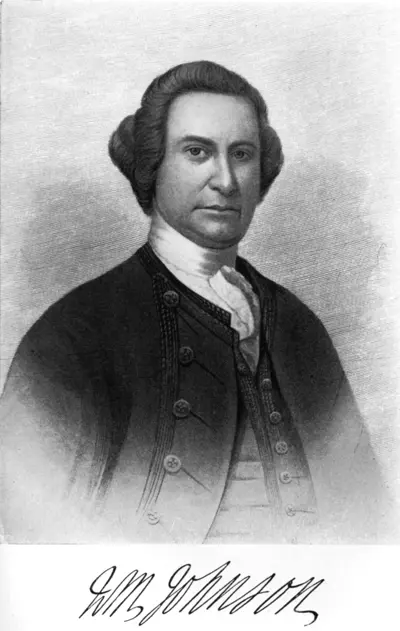
Sir William Johnson, 1st Baronet, was an Irish official of the British Empire. As a young man, Johnson moved to the Province of New York to manage an estate purchased by his uncle, Admiral Peter Warren, which was located amidst the Mohawk, one of the Six Nations of the Iroquois League. Johnson learned the Mohawk language and Iroquois customs, and was appointed the British agent to the Iroquois. Because of his success, he was appointed in 1756 as British Superintendent of Indian Affairs for the northern colonies. Throughout his career as a British official among the Iroquois, Johnson combined personal business with official diplomacy, acquiring tens of thousands of acres of Native land and becoming very wealthy.
