George Washington Quotes
I can never look upon that proclamation in any other light (but I say this between ourselves) than as a temporary expedient to quiet the minds of the Indians.
In the midst of the French & Indian Wars, the Board of Trade drafted the royal proclamation of October 7, 1763, forbidding the granting of lands in the vast interior, which was specifically reserved to the Indians. Most whites, themselves interested in land, saw this as a temporary expediency only. This quotation must be viewed in juxtaposition with his of 1767 on the subject: {624055}
George Washington, 1732-1799, 1st President of the United States (VA), Letter to his agent, 1763
Sourced by: Eigen's Political and Historical Quotations

In the midst of the French & Indian Wars, the Board of Trade drafted the royal proclamation of October 7, 1763, forbidding the granting of lands in the vast interior, which was specifically reserved to the Indians. Washington had earlier reservations about the attempt to protect Indian lands for the Indians. See {612772} Washington after the American Revolution did grant and protect Indian lands to the minority of the Indians who had allied with the Americans against the British and the majority of the other Indian tribes.

Not all whites were allowed to usurp all Indian lands. There were many attempts to limit white settlement to avoid friction with the Indians although the overall tendency was for the whites to take over and dominate the land.


Hull surrendered a few days later.

Despite Jefferson’s reasonable intentions towards the Indians, all the boundaries never did get fixed and existing agreements and treaties were abrogated usually by whites acting illegally but then were supported by their state government and if serious hostilities broke out, the Federal government usually entered the fray to defend the whites regardless of whether or not they abrogated the treaties. Some Indian nations complicated the situation by having a tradition of raiding neighbors and stealing horses or other goods. Whites, insisting on then rather severe “English type” law enforcement often inadvertently, started an Indian war with the Federal soldiers almost always defeating the Indians leading to yet another treaty by which the Indians were pushed from their land, Further, many whites “bought” lands from Indians in good faith while the Indians did not own the lands, thought that they were selling hunting rights as they had no tradition of property ownership. The consequence was tragic history which Jefferson and his successors failed to manage well.
The central Indian policy problem for Jefferson’s Administration was the fact that most Indians hunted for subsistence and the amount of land needed to support a hunting society was per capita much greater than an agricultural and especially an industrial one. Jefferson had no personal animosity against the Indians as many in his day did. But he perceived the need to obtain Indian lands for white agricultural use.
The central Indian policy problem for Jefferson’s Administration was the fact that most Indians hunted for subsistence and the amount of land needed to support a hunting society was per capita much greater than an agricultural and especially an industrial one. Jefferson had no personal animosity against the Indians as many in his day did. But he perceived the need to obtain Indian lands for white agricultural use.


In 1908 Austria had designs on the Balkans, whose small countries have been fought over for years.

Thunder Rolling Down the Mountain


At the time, Palestine was technically Turkish territory. Turkey was one of the defeated axis powers in World War I. England, as part of the World War I peace treaties, had control over Palestine as well as most of the rest of the Middle East.

Miller was the first Black American admitted to a Graduate Program—Johns Hopkins—in Mathematics

Shabonee in a warning ride reminiscent of Paul Revere, warned many white settlers of an impending attack by unfriendly Indians. He also gave an eyewitness account of the Battle of Tippecanoe which propelled Harrison to the Presidency. The U. S. Navy named a ship in his honor in the 1940s. Several schools are named for him also.

This was passed in 1787 before the Constitution had become operative, but was then ratified by Congress in 1789. It was one of the first acts of our new nation, and one of the most frequently violated throughout our history.


Note that there was still a serious attempt to coexist with the Indians and to pay for lands that whites moved into. This would change radically in the administration of Andrew Jackson who would replace Adams.
The century to which he was referring was the 19th century---1800-1899.


2nd Viscount Melbourne. The “American treaty” was the Webster–Ashburton Treaty to adjust the final borders between Canada and the United States that were still in dispute from the War of 1812. Note that the British Prime Minister was critical of the position that was being taken be some British diplomats. In many American negotiations with Russia and others, there are hard liners who believe that the negotiators want too much to preserve peace and are not sufficiently willing to go to war for the nation’s principles and honor. As this quotation shows, this is not just an American phenomenon, but in almost all nations there are hard liners critical of all international negotiations and fearing that a desire for an agreement will undermine the positions that should be taken. This is an example where the hard liners were on the non American side.
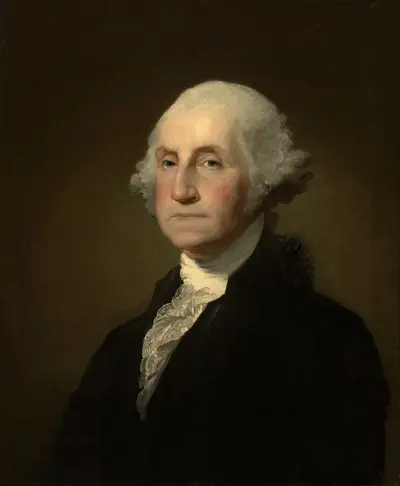
- Born: February 22, 1732
- Died: December 14, 1799
- Nationality: American
- Profession: President
George Washington was the first President of the United States (1789-97), the Commander-in-Chief of the Continental Army during the American Revolutionary War, and one of the Founding Fathers of the United States. He presided over the convention that drafted the current United States Constitution and during his lifetime was called the "father of his country".
