Chief Joseph Quotes
If the white man wants to live in peace with the Indian he can live in peace.
Joseph, Chief. "An Indian's View of Indian Affairs." The North American Review, vol. 128, no. 269, University of Northern Iowa, Apr. 1879, p. 432.


At the time all the Arab armies were attacking Israel. Many Arabs joined the assault or evacuated to return with the “victorious” Arab armies. Many others stayed in Israel. The former became the refugees of the area. The latter, are citizens of Israel with the best health and education in the Middle East and the only Arabs who have the freedom of living in a democracy.

She had gone to Europe where the 2nd World War was raging.


The central Indian policy problem for Jefferson’s Administration was the fact that most Indians hunted for subsistence and the amount of land needed to support a hunting society was per capita much greater than an agricultural and especially an industrial one. Jefferson had no personal animosity against the Indians as many in his day did. But he perceived the need to obtain Indian lands for white agricultural use.


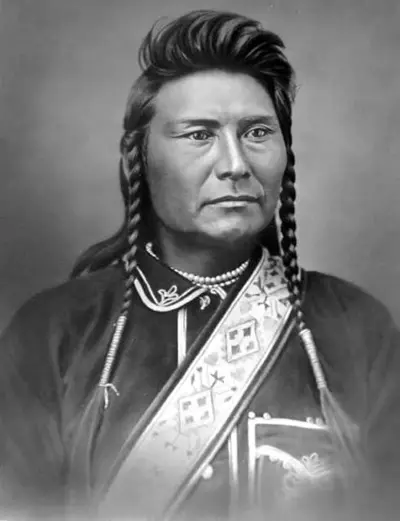
Hin-mah-too-yah-lat-kekt (or Hinmatóowyalahtq̓it in Americanist orthography), popularly known as Chief Joseph, Young Joseph, or Joseph the Younger, was a leader of the Wal-lam-wat-kain (Wallowa) band of Nez Perce, a Native American tribe of the interior Pacific Northwest region of the United States, in the latter half of the 19th century. He succeeded his father Tuekakas (Chief Joseph the Elder) in the early 1870s.
